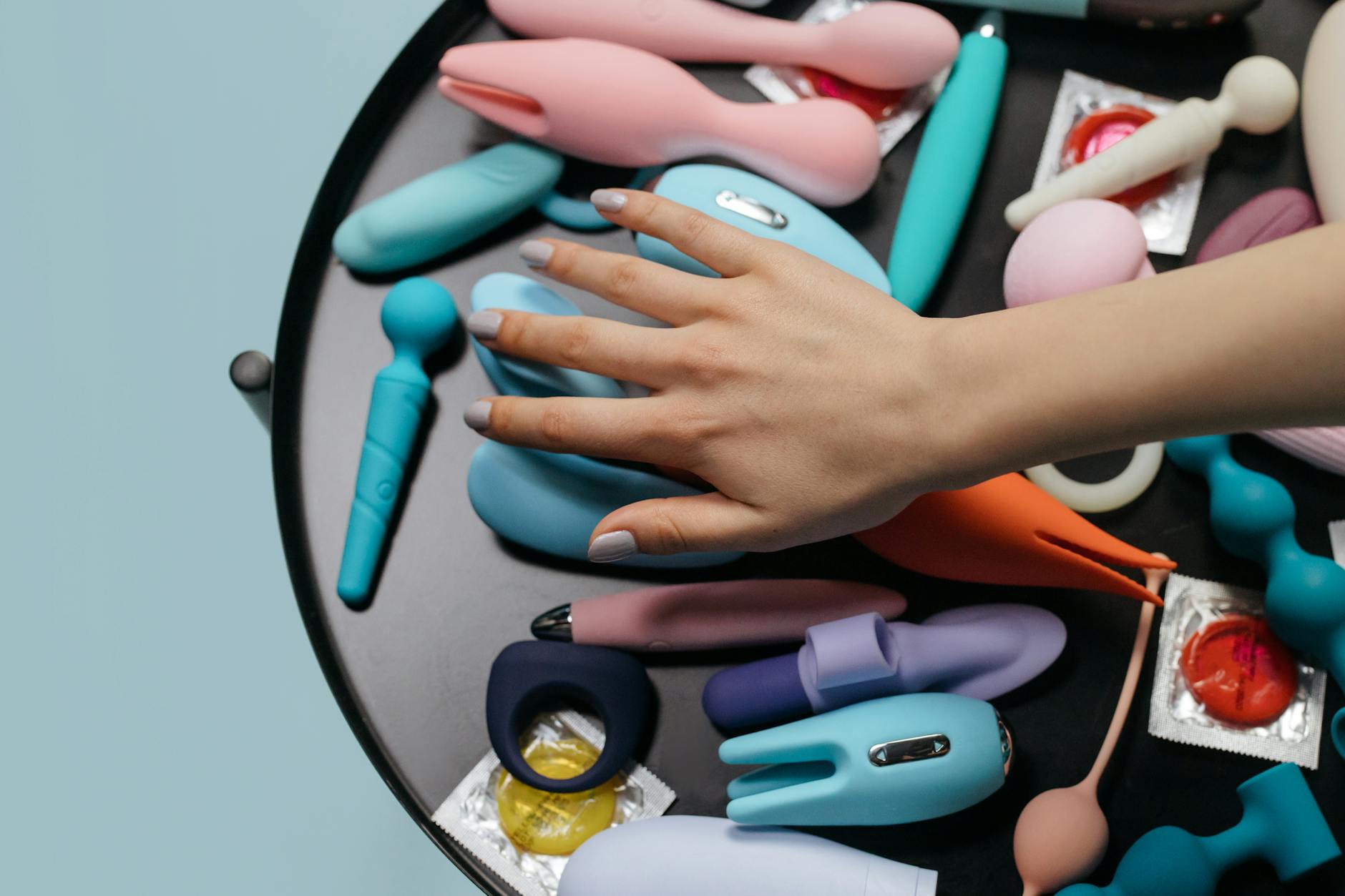
Let's talk about why your clitoris might hate most vibrators.
If you've ever felt like a traditional vibrator is too much, too direct, or honestly just uncomfortable after a few minutes, your body isn't broken. You might just need a different kind of stimulation entirely.
Most vibrators buzz. Lemon vibrators, including the Lem vibrator and other lemon clitoral designs, don't. They use a completely different mechanism called air-pulse suction technology, and the difference in sensation is night and day for people with sensitive clits.
The problem with straight vibration.
Your clitoris has about 8,000 nerve endings packed into an area smaller than a pea. When a traditional vibrator presses directly against it at high frequency, those nerves can become overstimulated in seconds. The sensation shifts from pleasurable to numb, raw, or even painful.
This happens because direct vibration fatigues the nerve receptors. They're designed to respond to changes in stimulation, not constant buzzing. Think of it like this: if someone taps your arm repeatedly in the same spot at the same speed, you stop feeling it after a minute. Your nerves adapt.
Sensitivity matters too. Some bodies are naturally more reactive to direct pressure. Others have hormonal changes that affect clitoral tissue thickness and blood flow. And some people are just wired differently. None of these are problems. They're just variations, and they need different tools.
How suction actually works (and why it feels different).
Instead of vibrating against your clitoris, air-pulse suction creates a gentle rhythmic pressure wave. It stimulates the entire clitoral structure, not just the exposed tip.
Here's what actually happens: the cup or opening fits gently around (not directly on) your clitoris. As the air pulses, it creates a slight vacuum. That vacuum pulls tissue gently into the chamber, then releases. The pulse repeats 100 to 300 times per minute, depending on the setting.
Why this matters: suction spreads stimulation across a larger surface area. It engages the entire vulva and the internal branches of the clitoris (which most people don't realise exist). The sensation is more enveloping, less laser-focused. For sensitive people, this distributed pressure is wildly more comfortable than direct vibration.
Many people also report that air-pulse lemon vibrators create a different kind of orgasm altogether. Instead of quick, surface-level contractions, the release tends to be deeper and more full-body. That's because the stimulation is working with your whole clitoral anatomy, not just the tip.
Why lemon clitoral vibrators are gentler on sensitive tissue.
If you're prone to irritation, or if direct vibration makes you feel raw after use, air-pulse suction is genuinely easier on delicate tissue.
Traditional vibrators require consistent contact and pressure. If the device is powerful, that pressure gets intense fast. Sensitive people often find themselves pulling away, adjusting position constantly, or just giving up.
Lemon vibrators, by design, work with less direct force. The suction is doing the work, not relentless buzzing. You can use them longer without discomfort. You also have more control. Most lemon designs offer multiple intensity levels, so you can start gentle and build slowly.
There's also the question of fabric. Air-pulse suction works beautifully over underwear or through thin fabric. So if direct contact itself bothers you, you have options. Traditional vibrators generally need skin contact to feel right.
The sensation profile: how suction feels minute by minute.
Here's what to expect when you use an air-pulse lemon vibrator for the first time.
Minutes 1-3: The sensation is warm, building. You might feel a gentle tugging. Some people describe it as a soft kiss or a light suction. It's not buzzing. It's pulsing. That's the key difference.
Minutes 4-7: Your clitoris swells slightly, and blood flow increases. The sensation intensifies naturally. You might want to increase the intensity setting as your body warms up. This is normal and means everything is working.
Minutes 8-12: Some people experience orgasm here. Others ride the edge for longer. Because the stimulation is less fatiguing than vibration, you have more endurance. You're not racing against numbing. You're building.
Post-orgasm: Unlike vibrators, which can feel overstimulating immediately after climax, air-pulse devices tend to feel soothing. Some people like to stay with the sensation for a minute or two after orgasm. Others enjoy using them on other parts of the vulva afterward.
Who benefits most from lemon vibrators.
If any of these describe you, air-pulse suction is probably worth trying:
You find regular vibrators uncomfortable or numbing. Your clitoris gets irritated after traditional vibrator use. You prefer a broader, less focused sensation. You've never had an orgasm from a sex toy before. You're exploring toys after menopause or during hormonal shifts. You have a vulva with thinner or more delicate tissue. You want a toy that works through underwear.
This isn't an exhaustive list. The real answer is: if you've felt frustrated with other vibrators, a lemon clitoral design is worth exploring. The mechanism is fundamentally different, and for roughly half of my clients with sensitivity concerns, it changes everything.
How to use a lemon vibrator if you're new to air-pulse.
Start with intensity level 1 or 2. Many people make the mistake of jumping to level 5 because the initial sensation feels gentle. The pleasure builds slowly, and jumping levels can feel overwhelming.
Position matters more than you might think. You don't need direct contact with just your clitoral tip. Many people find the best sensation comes from slight movement, angling the device slightly side-to-side, or positioning it over the entire vulval area.
Take time to warm up. Air-pulse suction works best when your tissues are already engaged and blood-filled. A few minutes of external touch, or even just thinking about what you want, primes your body beautifully.
Don't rush to orgasm. This is the hardest thing to hear, but the devices work best when you're exploring sensation without a goal. Once you know what each intensity level feels like and where you like the pressure, orgasm usually follows naturally.
Comparing lemon vibrators to other options.
If you're deciding between a traditional vibrator and a lemon clitoral design, here's the honest comparison.
Traditional vibrators: faster to orgasm for some people, simpler interface, smaller and more portable. Best for people who want direct stimulation and don't have sensitivity concerns.
Lemon vibrators and air-pulse devices: gentler on sensitive tissue, longer endurance, deeper sensation, work over clothing, learning curve on how to position them. Best for people with sensitivity, or anyone who wants a different sensation profile.
Wand vibrators: versatile (work internally and externally), powerful, but can be overstimulating. Better for people who like broad surface stimulation but still want vibration.
Your body might prefer one, or you might rotate between them depending on your cycle, mood, or what you're in the mood for. That's not indecision. That's wisdom.
The role of routine and body literacy.
One thing I notice with clients who switch to air-pulse devices: they often report feeling more connected to their own pleasure.
Because lemon vibrators don't numb your nerves, you stay present. You feel every pulse. You can notice what intensity level actually works for you on a given day, rather than cranking it to max hoping something happens.
This matters for couples too. If you've been frustrated with vibrators, your partner might have internalised that as a reflection on them. Switching to a device that actually works for your body can shift that whole dynamic. The pleasure becomes collaborative again, not frustrating.
Your body isn't the problem. The tool was just the wrong fit.
People also ask
Are lemon vibrators quieter than regular vibrators?
Yes, usually significantly. Air-pulse devices make a soft humming sound, whereas traditional vibrators can buzz quite loudly. If discretion matters in your living situation, this is a genuine advantage. You can use them with a closed door and know the sound won't carry far.
Can I use a lemon vibrator if I'm menopausal or have low estrogen?
Absolutely. In fact, if you're experiencing changes in clitoral sensitivity or tissue thinning during menopause, air-pulse suction can be ideal. The gentler stimulation works beautifully with thinner tissue, and you don't need the direct pressure that can feel uncomfortable when tissue is more delicate. Many people find their pleasure actually deepens post-menopause with the right tool.
How do lemon clitoral vibrators compare to other suction toys?
All air-pulse suction devices work on the same basic mechanism, but design matters. The Lem vibrator and other lemon designs are engineered specifically for clitoral pleasure, with thoughtful intensity ranges and ergonomic shapes. Some suction toys are clunky or too powerful. Look for devices designed by people who understand vulval anatomy and sensitivity variation.
Will I become dependent on air-pulse devices and stop being able to orgasm other ways?
No. Your body doesn't work that way. Variety is healthy. You might find you prefer air-pulse stimulation, which is fine. But pleasure is neuroplastic. Using one type of device doesn't rewire your capacity for other sensations. You're not training your clitoris. You're just finding what feels good.
What if I try a lemon vibrator and it doesn't work for me?
That's also totally normal. Not every device works for every body. What matters is that you've tried something different from the standard vibrator. If air-pulse suction isn't it, you now know more about what you need. Some people do prefer direct vibration, and that's fine. The goal is finding something that works, not forcing yourself to like something because it's supposedly better.
How do I know if my sensitivity is normal or something I should mention to a doctor?
If direct vibration causes pain, numbness, or bruising, that's worth mentioning. If it's just discomfort or lack of sensation, that's variation. If you're experiencing new pain during sex where there wasn't pain before, especially alongside other symptoms like discharge or itching, talk to a GP. But if you're just someone who prefers a gentler sensation, that's not a medical issue. It's just you.
What comes next
If you've been frustrated with vibrators, the problem isn't you. The solution might just be a tool designed differently. Lemon vibrators and air-pulse devices work on an entirely different principle, and for people with sensitive clits, that difference is enormous.
The best part? You don't have to take my word for it. Try one, notice what your body tells you, and trust that. Your pleasure is worth the experiment.
If you have questions about what might work best for your body, or if you'd like to talk through your pleasure concerns with someone who understands the nuance here, reach out. That's what I'm here for.
References
- Komisaruk, B. R., et al. (2006). "Women's Clitoris, Vagina, and Cervix Mapped on the Sensory Cortex." Proceedings of the National Academy of Sciences USA, 103(30), 11461-11466.
- O'Connell, H. E., et al. (1998). "Anatomical relationship between urethra and clitoris." Journal of Urology, 159(6), 1892-1897.
- Lenart, M. E., et al. (2015). "Sexual satisfaction among women and men: evidence from a large European survey." Journal of Sexual Medicine, 12(5), 1220-1229.