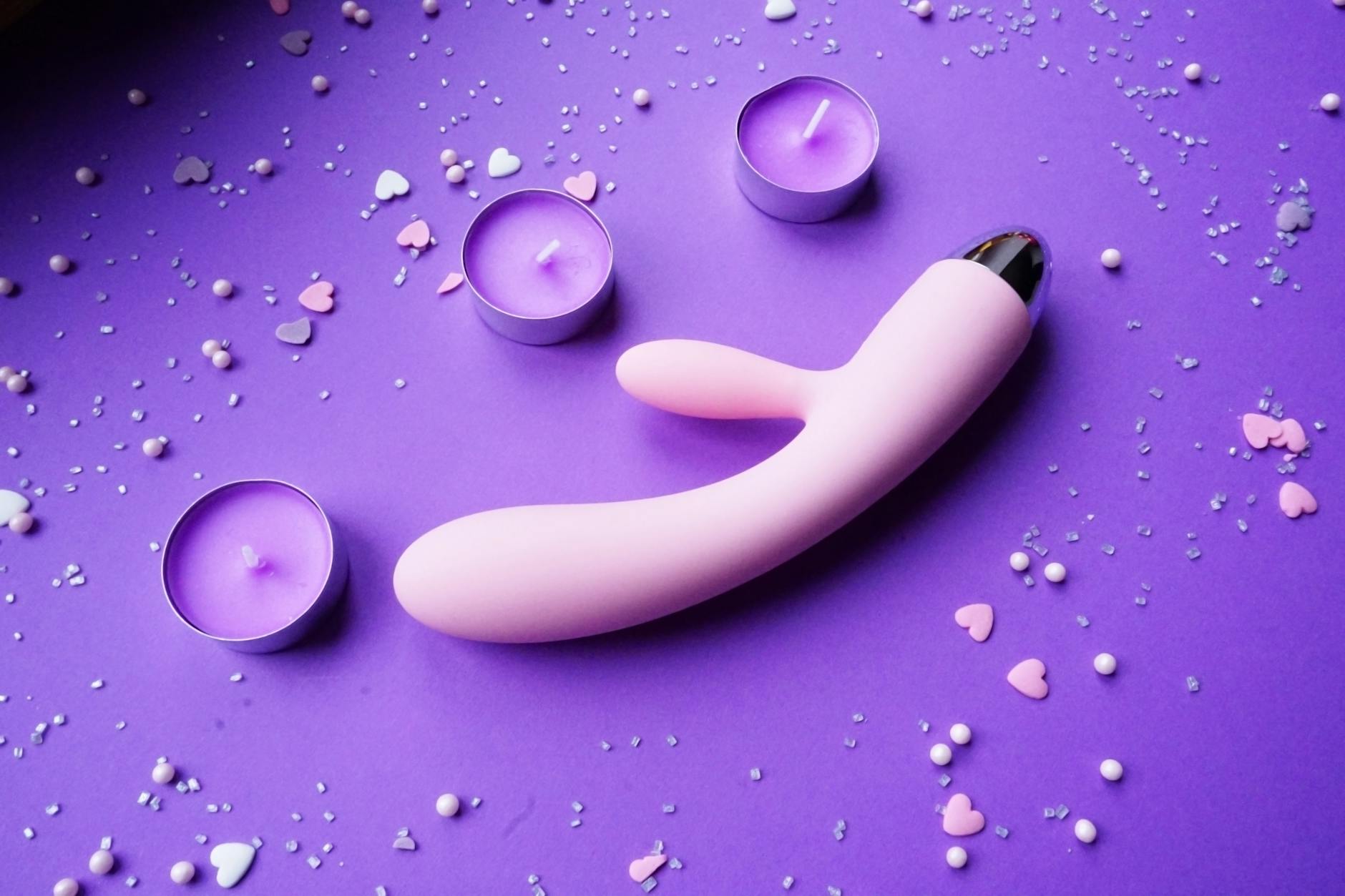
Let's start with what's actually happening
You're not imagining it. If your clitoral vibrator feels wildly different week to week, that's not a malfunction. That's hormones doing their job, and your body responding exactly as designed. The same lemon vibrator that felt too intense three weeks ago might feel like it's barely there today.
Here's the thing: most people learn to use their vibrators during one specific window of their cycle and then get frustrated when the settings don't work the rest of the month. That's like setting your phone brightness once and then wondering why it's hard to read in bright sunlight.
The four-week map of sensitivity
Your cycle has four distinct hormonal phases. Each one changes the blood flow to your clitoris, the thickness of the skin protecting the nerve endings, and how quickly signals travel to your brain. Here's what you need to know.
Week 1: Bleeding and low hormones (Day 1-7)
Estrogen and progesterone are bottoming out. This means less blood flow to the clitoris, which translates to reduced sensitivity. The tissue is thinner and more delicate. Many people report that their usual intensity setting feels uncomfortable or even painful during this window. Your pelvic floor is also more tense due to hormone withdrawal, which can make vibration feel sharper.
What works: lower intensities on your Hello Nancy clitoral vibrator, longer warm-up time, and extra lubrication. Some people skip penetrative play entirely during this phase and focus on external stimulation at gentler settings.
Week 2: Follicular phase (Day 8-14)
Estrogen starts climbing. Blood flow to the clitoris increases gradually, and the tissue plumps slightly as fluids shift. By the end of this week, you're likely feeling more. Many people find their sensitivity increasing steadily, day by day. Energy levels rise, desire often increases, and what felt meh last week starts feeling better.
What works: you'll probably be able to gradually increase intensity throughout the week. If you usually use a lemon vibrator on setting 3, you might find setting 4 or 5 becoming accessible mid-week. This is prime time for experimenting.
Week 3: Ovulation (Day 15-21)
Estrogen peaks, then drops sharply after ovulation. This is your sensitivity sweet spot. Blood flow is at its peak, the clitoral tissue is fully engorged, and nerve endings are maximally responsive. Many people report their strongest orgasms during this window. Desire often peaks. Everything feels more.
What works: your favorite intensity settings will feel great here. If you've been curious about a higher setting you're usually nervous about, this is when to try it. Your body is primed for it. This is also when you might discover that playing with a partner feels different. Increased arousal, faster buildup, more intense sensation.
Week 4: Luteal phase (Day 22-28)
Progesterone rises, estrogen drops again. Sensitivity dulls. Blood flow decreases. The pelvic floor tightens. You might feel less interested in external stimulation and more drawn to deep, internal sensation. Some people report that their usual vibrator settings feel annoying or overstimulating. Others find they need higher intensity to feel anything at all. This is also when anxiety and stress tend to peak, which can dampen arousal separately from the hormonal piece.
What works: lower intensities early in this phase, or switching to a different type of stimulation entirely. Some people find that a wand vibrator (like the Lolly Mini) feels better than a clitoral suction toy during this week because the sensation is broader and less direct. Others prefer partnered touch or manual stimulation.
Why this matters for your vibrator choice
If you're using a clitoral vibrator with only two or three intensity settings, you're going to feel limited during parts of your cycle. A lemon vibrator with a wider range of settings (like the Lem, which has multiple patterns and intensities) gives you flexibility to meet your body where it is each week.
You're not broken if setting 5 feels perfect on Day 15 and unbearable on Day 25. You're not losing sensitivity or gaining it. You're cycling through a predictable biological pattern that happens roughly 13 times a year.
How to map your own cycle
Start tracking three things for one month. Nothing fancy. Just notes.
1. Sensation. Each time you use your vibrator, jot down what intensity you ended up using and how it felt. Comfortable, intense, too much, not enough.
2. Desire. Not orgasm. Just whether you felt interested in sexual activity. This tracks separate from sensation and matters for context.
3. Calendar day relative to bleeding. Day 1 is the first day of bleeding. Mark when you ovulate if you know it (ovulation usually happens around Day 14, but some people are Day 10, others Day 17).
After one cycle, patterns usually emerge. You'll see which weeks you prefer which settings. Then you can plan accordingly. Want to try something new? Schedule it for ovulation week when you're most receptive. Feeling raw and tender? Stay with lower settings or take a break.
The role of your pelvic floor
Hormones don't just affect blood flow and tissue thickness. They also change how your pelvic floor muscles respond. Higher estrogen loosens the pelvic floor slightly, making it more receptive to vibration. Lower estrogen tightens it, which can make the same vibrator feel more intense even though the vibrator hasn't changed.
This is why some people say their lemon clitoral vibrator works better for them mid-cycle than other times. It's not the vibrator. It's the pelvic floor.
One simple practice that helps throughout the month: learn to consciously relax your pelvic floor before using any vibrator. Most people clench automatically when aroused, which actually reduces sensation. A few deep breaths and a deliberate release can make a massive difference in how a vibrator feels.
What partners need to understand
If you share your sensitivity map with a partner, you're giving them real information about your body. "I'm more sensitive this week, so lighter touch" or "I need more intensity right now" isn't a rejection or a complaint. It's data. It helps them understand that the best version of pleasure isn't a fixed target. It's a moving window that changes throughout the month.
Some couples find that working with the cycle (rather than ignoring it) actually strengthens intimacy. You're both paying attention. You're both adapting. You're both invested in what actually feels good rather than what's supposed to feel good.
The hormonal birth control wrinkle
If you're on hormonal birth control, your cycle is flattened. Hormones stay relatively stable, which means your sensitivity should too. This is one reason some people on birth control report more consistent pleasure, and others report less intense sensation overall. You're missing the natural peaks.
Some people find that their favorite vibrator settings change when they switch birth control methods or stop taking it. This isn't weird. You're genuinely experiencing different hormone profiles, and your body is responding accurately.
When to experiment
Know your baseline first. Use your vibrator for at least one month without trying to optimize anything. Just notice. Notice what intensity you reach for, how fast you warm up, whether orgasms feel different.
Then pick a specific phase to experiment in. Want to try a clitoral suction toy for the first time? Do it during ovulation week when you're most receptive. Want to see if you can achieve orgasm with a certain type of stimulation? Try during your follicular phase when arousal is naturally climbing.
People also ask
Does cycle tracking actually matter if I'm not trying to get pregnant?
Yes. Even if fertility is irrelevant to you, the hormonal changes are real and they affect pleasure. Tracking isn't about predicting ovulation. It's about working with your body's natural rhythms instead of fighting them. Once you understand your pattern, you can make better choices about when to use your vibrator, what settings to use, and what kind of touch feels good.
Can I make a vibrator feel better if I'm in a low-sensitivity phase?
Absolutely. Extra lubrication helps. Longer warm-up time helps. Lowering intensity helps. Some people find that switching from a clitoral vibrator to a wand or internal vibrator feels better during low-sensitivity weeks. You can also just choose not to use a vibrator and explore other types of stimulation. Your body isn't broken. It's just cycling.
Will my sensitivity come back after hormonal changes like stopping birth control?
Usually, yes. If you've recently stopped birth control or experienced a hormone shift, give your body two to three months to settle. Sensitivity patterns might feel different than they did before, especially if your cycle was synthetic for a long time. But the cycle-based variation typically returns once your natural hormones re-establish.
Does this sensitivity cycle happen to people without a uterus?
No. The four-phase cycle described here is specifically tied to estrogen and progesterone fluctuations that happen with a menstrual cycle. People without a menstrual cycle don't experience this same pattern, though other factors (stress, sleep, relationship dynamics, medication) still affect sensitivity and pleasure.
What if my sensitivity doesn't match the typical cycle?
Some people experience a 23-day cycle, others 35 days. Some people have barely noticeable sensitivity shifts, others have dramatic ones. Track your own body first. Don't assume you match the textbook pattern. Two months of notes will show you your actual rhythm, which might be totally different from the standard four-week map.
Should I tell my partner about my cycle sensitivity shifts?
If you're in a relationship that involves sexual activity, yes. Not as a warning or apology. Just as information. "I'm more sensitive this week, let's try lower intensity" or "I'm feeling more adventurous this week, let's try something new" helps both of you work together. It takes the guesswork out of "why doesn't this feel as good as last week?"
The bottom line
Your lemon clitoral vibrator isn't broken. Your body isn't broken. You're cycling through a predictable biological pattern that happens about 13 times a year. Once you understand it, you can stop fighting it and start working with it. That's when pleasure gets better, not because your vibrator changed, but because you stopped expecting yourself to feel the same way every single day.
If you want to dig deeper into how pleasure works throughout your whole cycle, including partnered dynamics and emotional shifts, reach out. That's exactly the kind of thing I love helping people navigate.
References & sources
This article draws on research in reproductive endocrinology and sexual response physiology, including studies on hormonal fluctuation and genital blood flow across the menstrual cycle. Core concepts come from the work of pioneers like Masters and Johnson, and contemporary research by sex educators and pelvic floor specialists. If you're experiencing pain or significant changes in sensation, consult a healthcare provider familiar with sexual health.