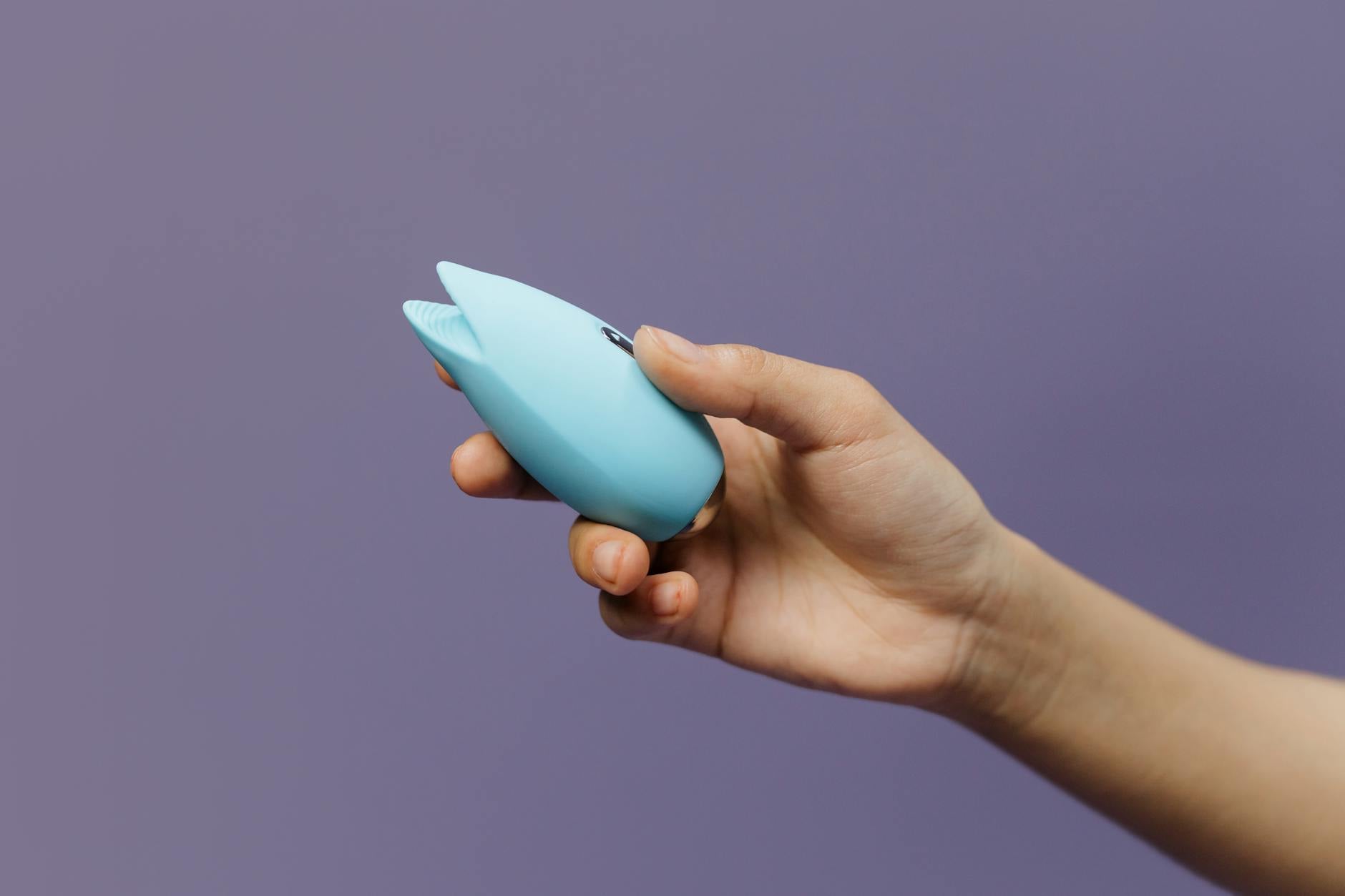
Here's what nobody tells you about pleasure after 50
Your body has changed. Not broken. Changed. And those changes actually make lemon vibrators work differently than they did in your 30s or 40s. Some women over 50 find that air-suction toys feel less intense. Others find they feel more intense. A few discover they finally get what the fuss was about. The difference often comes down to one thing. You're approaching this with zero pressure and actual curiosity.
I've worked with hundreds of women in their 50s, 60s, and beyond, and the pattern is clear. Lemon clitoral vibrators work beautifully for this life stage. But only if you understand what's actually happening in your body and adjust your expectations accordingly.
What changes with your tissues (and why it matters)
Estrogen drops. You already know this. What that actually means for sensation is less obvious. The clitoral tissue thins slightly, which can make direct vibration feel sharper or more intense than it used to. The surrounding tissue loses some of its plumpness, which changes how the clitoris sits in relation to the surrounding anatomy. Air-suction vibrators like the Lem respond to these shifts in interesting ways.
Instead of pressing directly against tissue, suction creates a gentle pull. For women over 50 with thinner tissue, this often feels gentler than traditional vibration while still delivering strong sensation. You're not grinding against anything. You're being drawn into the suction, which feels different.
Your arousal also takes longer to build. This isn't a flaw. This is your nervous system asking for more foreplay. Twenty minutes of warmup isn't excessive at 50. It's biological. And it's when lemon vibrators shine, because you can start them on a lower setting and build gradually.
Why air-suction works better for this stage than you'd expect
Think about the difference between someone poking your arm and someone gently pulling the skin on your arm. Both create sensation. One feels aggressive. One feels almost magnetic. That's roughly the difference between traditional vibrators and suction toys like the Lem.
For women over 50, this matters because the tissue is more delicate. Not fragile, not broken. Delicate in the way that older skin is more delicate. It responds better to pull than to percussion. Women over 50 using the Lem often report that they can use it longer without numbness, feel the sensation more clearly, and reach orgasm more easily than they did with their previous vibrators.
The Lem starts at a lower intensity baseline than many traditional vibrators. Pattern 1 and 2 are genuinely gentle. You're not forcing yourself to tolerate something you don't want just to feel anything at all. You can actually use the thing on a setting you enjoy.
How your pleasure patterns shift (and what that unlocks)
Here's the thing nobody says out loud. Your orgasms might actually change in a way that feels better. I'm not saying that to be optimistic. This is clinical observation from decades of coaching women through this transition.
Some women report that orgasms feel more localized after 50, concentrated in the clitoris rather than full-body waves. Some find they're quieter, less theatrical. Some find they take longer to build but feel deeper. Some find that they can have multiple orgasms for the first time in their lives.
The reason? Partly neurological. Partly because you're not performing anymore. Partly because the clitoral nerve endings are still absolutely there, still firing, still capable of intense sensation. The pathway just reorganizes slightly.
With a lemon clitoral vibrator, these shifts often mean you finally feel satisfied instead of frustrated. You stop chasing the orgasms you used to have and start enjoying the ones you're actually having right now.
The practical setup that works at 50+
Four things that matter more at this life stage.
Lubrication is mandatory. Not optional. Water-based lube, applied generously. Your body produces less natural lubrication after menopause, and that's just biology. Kin lubricant (if you've got access) is exceptional. Anything water-based and glycerin-free works. Apply more than you think you need. This isn't weakness. This is using the right tool for the right job.
Start at the lowest setting and stay there longer. If you've been using higher settings on other vibrators, fight the urge to jump straight there. Let your body relearn what intensity feels good at this stage. Many women over 50 find that patterns 2 or 3 on the Lem are more than enough. Spending fifteen minutes at a lower intensity often feels better than five minutes at maximum.
Budget actual time. Arousal takes longer. This isn't a speed problem. It's a richness problem. When you finally reach that building sensation, it often feels more intense precisely because you've let it develop slowly. Rushing it defeats the point.
Position matters more now. Lying on your back might not be your best angle anymore. Some women over 50 find they get better sensation from side-lying. Others prefer sitting up or lying on their stomach. Experiment. Your pelvic anatomy has shifted slightly, and you deserve to find positions that work with your body instead of against it.
What to expect in your first week
You'll probably use it and feel... something. Maybe not fireworks. Maybe just a pleasant buzz that feels different from what you remember. That's completely normal. Your nervous system is relearning this sensation at a new life stage.
By day three or four, your body often starts remembering. By day seven, many women report that they've found their rhythm with it. You'll know which pattern you actually like instead of the one you think you should like. You'll know how much lube is actually enough. You'll know whether you prefer it on a specific part of the clitoris or whether you like to move it around.
This is information gathering. Not pressure to perform or achieve anything specific. Just you and your body figuring out what feels good right now, at this stage, in this season of your life.
The relationship conversation if you've got a partner
If you're using a lemon clitoral vibrator solo, this is straightforward. But if there's a partner involved, this deserves its own conversation separate from sex itself.
"I want to explore my own pleasure more" is different from "I'm not satisfied with what we're doing." Mixing those conversations creates confusion for both of you. The first one is about agency and curiosity. The second is about partnership and intimacy. They're not the same.
Many women over 50 find that introducing a toy into partnered sex opens doors that have been closed for years. But that works best when the partner understands it's not about them. It's about you having access to sensation that your body needs at this stage.
If your partner is uncertain, the best move is honesty. "This feels amazing for me. I want to share this with you, and I also want to explore it on my own sometimes." Most partners get this. The ones who don't might have other concerns worth addressing separately.
When to talk to a doctor
If you experience pain, don't tough it out. Genitourinary syndrome of menopause (GSM) is real, extremely common, and highly treatable. A GP or gynaecologist trained in menopause medicine can prescribe topical estrogen that works within weeks. This isn't weakness. It's medicine.
If you've completely lost interest in sex and it's been months, mention it to your doctor. This could be hormonal. It could be relationship stuff. It could be medication side effects. A good doctor can help you sort it out.
If you're on hormone therapy and things shifted, talk to whoever prescribed it. Dosing and timing matter, and sometimes small adjustments make a big difference.
The freedom part nobody talks about
There's something that happens for many women over 50 when they give themselves permission to explore pleasure on their own terms. The performance falls away. The anxiety about whether you're doing it right disappears because there's nobody judging. The comparison to your younger self stops mattering because you're not trying to be 35 anymore.
You're trying to be 50-something and present with what actually feels good right now. And that, oddly enough, is when the really good stuff starts happening.
Lemon vibrators aren't magic. But they're specifically designed for the kind of sensation that works at this life stage. Combined with patience, lubrication, and actual curiosity about your own body, they're genuinely transformative for a lot of women over 50.
FAQ: Your actual questions answered
Is it normal for a lemon vibrator to feel different on my body than it did on my partner's?
Completely. Everyone's anatomy is different, and it changes over time. What feels amazing for your partner might feel odd for you. Tissue thickness, clitoral positioning, sensitivity levels. All different. The Lem works beautifully across a wide range of bodies, but it's not one-size-fits-all. If it doesn't feel right in the first week, give it two more weeks before deciding. Your body might need time to adjust.
Can I use a lemon clitoral vibrator if I'm on hormone replacement therapy?
Yes. HRT doesn't interfere with vibrators. Some women find their sensitivity increases slightly on HRT, which can change their preferred setting. If you've been on HRT for a while and suddenly everything feels too intense, you might just need to dial back to a lower pattern. That's adjustment, not a sign something's wrong.
How do I know if I'm using too much lubrication?
You're not. I've never worked with someone who used too much. "Too much" isn't really a thing at 50+. The Lem creates its own seal, so excess lube just means easier cleanup. Generous application is the goal.
My partner wants to use a lemon vibrator with me but I'm nervous. How do I approach this?
Talk about it fully clothed, not in bed. Explain what you want from it. Clarify that it's not about them. Many men over 50 have watched their partners struggle with pleasure and feel relieved to have a tool that actually helps. Give your partner time to adjust to the idea. And remember, you get to try it solo first. Get comfortable with it yourself, then decide if you want to share.
Do lemon vibrators work if you're on antidepressants?
Most SSRIs and SNRIs reduce natural lubrication and can dull sensation slightly. The Lem's suction mechanism often works better than traditional vibration for people on these medications because it creates sensation without requiring as much sensitivity. Water-based lube is essential. If sensation is significantly impaired, mention it to your prescriber. Sometimes dosing or timing adjustments help. Sometimes switching to a different class helps. Sometimes this is just a side effect you manage.
What if I've never had an orgasm and I'm over 50? Can a lemon vibrator help?
Yes, but set realistic expectations. A toy isn't magic. What a quality vibrator like the Lem does is remove some of the barriers. It creates consistent, reliable stimulation that your hand can't match. It lets you explore without performance pressure. Many women who've never orgasmed find they finally can with the right toy, the right lube, and the right headspace. But this works best alongside actual support. If you've gone decades without orgasm, talking to a therapist trained in sexual health can be transformative.
Keep exploring
Your body at 50+ isn't less capable of pleasure. It's differently capable. Lemon vibrators are specifically designed for how sensation actually works at this life stage. Give yourself permission to experiment, adjust your expectations, and most importantly, stay curious.
If you want to talk through what might work for your body specifically, reach out to Hello Nancy. We're here to help.