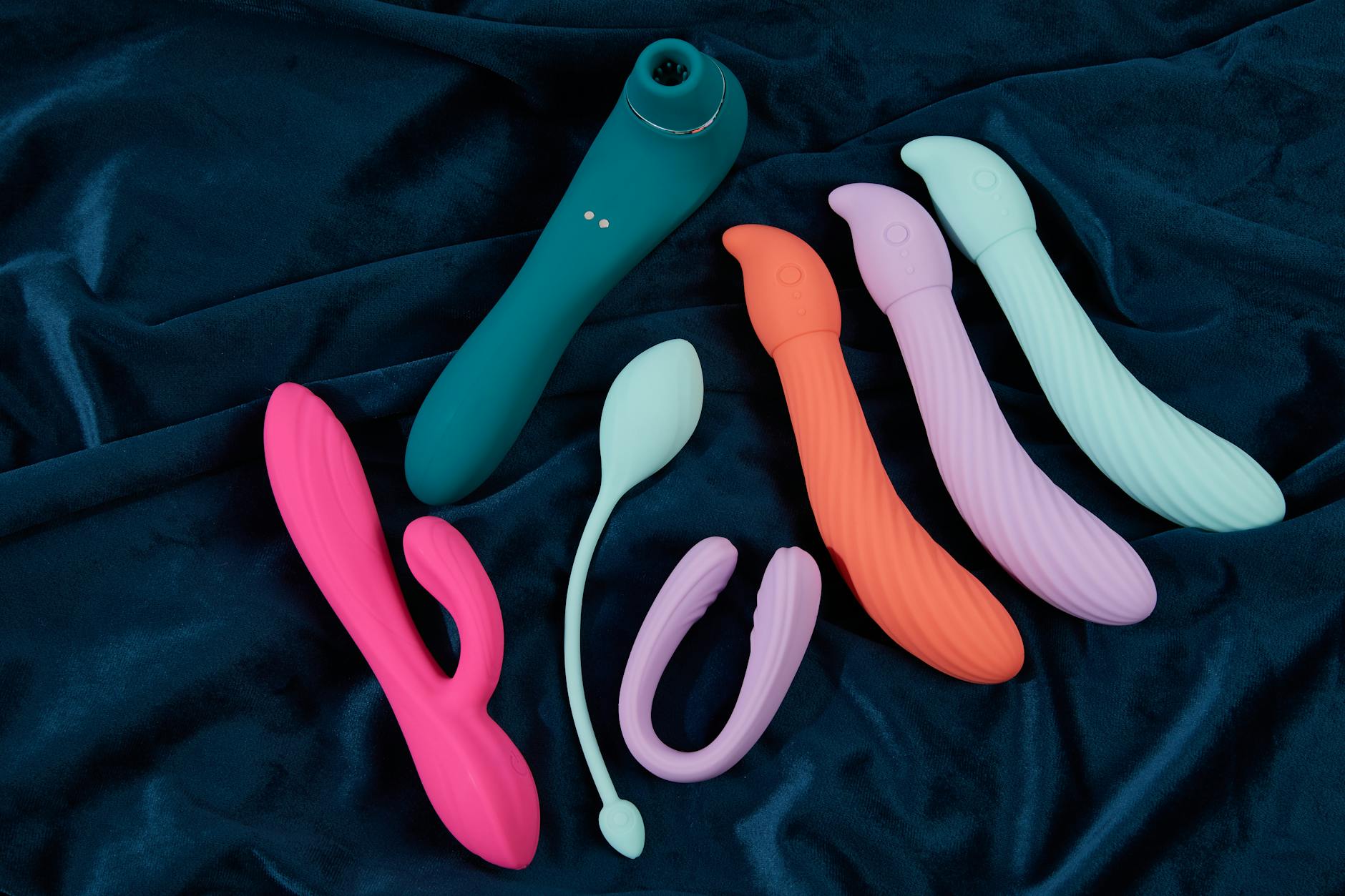
Let's talk about the elephant in the bedroom
Adding a lemon vibrator to partnered sex can feel risky. You're worried about rejection, about whether your partner will feel insecure, about whether it signals something is broken. Here's what I've learned from two decades of working with couples: the awkwardness isn't about the vibrator. It's about the conversation that doesn't happen first.
When you bring a clitoral vibrator into partnered sex without scaffolding, both people are flying blind. Your partner doesn't know if you're bored, if they're not enough, or if you just want to try something new. You don't know if they'll feel resentful, competitive, or secretly relieved. That gap between intention and perception is where the real friction lives.
This guide is about collapsing that gap.
Why vibrators actually strengthen partnered sex
Let's start with the counterintuitive part. Most couples assume introducing a toy means less reliance on the partner. The opposite is what usually happens. A lemon vibrator, a lemon clitoral vibrator, or any other external toy becomes a collaborative tool. It's something you're doing together, not something replacing the person next to you.
Physiologically, clitoral vibrators change the timeline of arousal. For many people with vulvas, direct clitoral contact from fingers or tongue alone can be inconsistent. Sometimes the angle is wrong. Sometimes the pressure fluctuates. A lemon sucker or traditional vibrator removes that variability. Your partner watches you respond more reliably, orgasm more easily. That's not weakness on their part. It's clarity.
Emotionally, using a lemon vibrator together signals something crucial: your pleasure matters enough to problem-solve for. For many people, especially women over 30, that's a radical shift from years of accommodating a partner's timeline. Introducing toys is actually introducing radical acceptance into the relationship.
The conversation framework that works
Don't drop a vibrator on your partner unexpectedly and hope for the best. That's a setup for hurt feelings and wasted money.
Instead, start outside the bedroom. Pick a calm moment, low-stakes energy. "I've been thinking about trying something new sexually, and I wanted to talk to you about it first" is enough. You're not asking permission. You're opening dialogue.
Here's what to address:
Why you want to try it. "I've read that lemon vibrators can help me orgasm more easily, and I want to experience that together with you" is honest and specific. "I want to improve our sex life" is also true, but it plants a seed of doubt about whether the sex life is already failing. Specificity matters.
What role they play. This is crucial. Are you using the lemon clitoral vibrator during penetration? During foreplay? Are they holding it, or are you? Are they inside you while you use it on yourself? The logistics prevent assumptions.
What you need from them. Maybe it's enthusiasm. Maybe it's patience while you figure out what feels good. Maybe it's feedback on what they're noticing. Ask directly.
Space for their concerns. If they're worried about being replaced, that's real and worth naming. Not dismissing. "I get why that might feel strange, and I'm glad you told me" goes further than "that's silly." If they're curious but nervous, lean into the curiosity. If they're not interested right now, that's information too. Some partners need time.
Positioning and logistics
Once you've had the conversation and both people are ready to try, the mechanics matter.
For receiving partner focus. If you're the person receiving penetration and using a lemon vibrator clitorally, you have a few options. You can use it on yourself while your partner penetrates you. This is the most common and gives you full control over intensity and timing. You can guide your partner's hand while they hold the vibrator. This requires less coordination but takes focus. Your partner can use the lemon vibrator on you while you use other sensations. This requires the most trust because you're not holding the tool, but some couples find it deeply intimate.
For solo vibrator use during partnered sex. If you're using the vibrator solo during penetration, position yourself so your partner can see or feel what's happening. Visual feedback matters. Many partners find it wildly arousing. Practically, this usually means being on top or side-by-side. Missionary works but angles get tight.
For foreplay. The lightest introduction is using a lemon clitoral vibrator during foreplay before penetration. Your partner can use it on you while they kiss you, enter the space between you two, create a rhythm together. This removes the logistical complexity and lets both people focus on sensation and connection.
Start with foreplay. Master that first. Then move to during-penetration if you both want to.
Timing and building rhythm
Here's where most couples stumble. Your partner is moving at their rhythm, the vibrator is moving at another rhythm, and suddenly nothing feels synchronized.
The fix: start with the vibrator before your partner enters. Let your body warm up to the sensation. Build some arousal solo, then your partner joins. This prevents the collision of rhythms. Your partner can enter slowly, feel how your body responds to both sensations, and adjust their pace to complement the vibration rather than fight it.
Speed matters too. A lemon vibrator at full intensity changes the timeline. You might orgasm faster than usual. That's not a failure. It's information. If your partner is used to a longer session, communicate that the addition of the vibrator will probably compress the timing. Some couples love that. Others adjust by using the vibrator only at the end.
One pattern that works well: your partner brings you close with hands, tongue, or penetration. You or they introduce the vibrator as you're nearing climax. The vibration pushes you over the edge. Then your partner continues inside you or against you while you recover. Many people find the sensitivity after orgasm intensifies connection.
What to do if it doesn't feel good the first time
Listen. Not every first attempt works.
Maybe the vibration feels too intense. Maybe you can't concentrate. Maybe your partner feels uncomfortable with the visual or the rhythm. None of that means vibrators don't work for you. It means the setup needs adjustment.
Common fixes: lower the vibration intensity (most lemon vibrators have multiple settings). Add more lubrication. Change positions. Try it on its own first before adding penetration. Give yourself permission to stop and laugh about it.
The difference between couples that integrate toys successfully and couples that don't? The successful ones treat the first attempt as experimental, not a test of the relationship. You're problem-solving together, not against each other.
Sensitivity considerations
If you're returning to sex after a long break, adding vibration can actually help calibrate your arousal. If you have reduced sensation, a lemon clitoral vibrator provides the consistent stimulation that fingers sometimes can't. If you're dealing with vulva health changes, a toy might feel better than direct touch.
The thing is: these are all conversations worth having with your partner. "My body has changed and this helps" is radically vulnerable and deeply intimate. Many couples find that naming the issue, problem-solving around it, and trying something new together actually rebuilds connection that was fraying.
If sensitivity is an issue for you, how to use lemon vibrators with less sensation and still have amazing orgasms covers specific techniques that translate to partnered play.
The emotional dimension
Using a lemon vibrator with a partner is not a mechanical addition. It's a statement that you're willing to evolve your sex life together. That you trust them enough to be vulnerable about what you need. That their pleasure in your pleasure matters more than your pride.
For some couples, this is transformational. The act of introducing a toy becomes a moment where the relationship deepens because both people showed up honestly.
For others, it's just a fun thing to try. Neither is more valuable.
What matters is that you're communicating, adjusting based on feedback, and treating each other's responses with curiosity instead of defensiveness.
People also ask
Can using a clitoral vibrator with a partner make it harder for me to orgasm without one later?
This is the worry that stops most people from trying. The short answer: no, not if you're using it as one tool among many. Think of it like learning an instrument. Learning piano doesn't break your ability to play guitar. Your body doesn't "get addicted" to vibration. It gets better at recognizing pleasure. What sometimes happens: you realize you prefer vibration during penetration and manual stimulation alone during other moments. That's not dysfunction. That's information.
My partner is worried the vibrator means they're not enough. How do I address that?
Direct conversation, not reassurance theater. "I love having sex with you. I also want to experience my body in new ways, and I want you there while I do it" is the truth. Then create an experience where that's literally what happens. When your partner watches you respond more intensely, orgasm more reliably, the insecurity often dissolves because they're witnessing your pleasure directly. They're not being replaced. They're being included in something deeper.
Is there a best position for using a lemon vibrator during partnered sex?
Side-by-side and woman-on-top are the most popular because they give you room to position the vibrator without your partner's body in the way. Missionary works if you angle the vibrator between your bodies, but it requires more coordination. Start with whatever position lets you hold or control the vibrator easily. Comfort with positioning comes before comfort with sensation.
How do I know which lemon vibrator is best for couples play?
Size and control matter. A smaller, more discreet vibrator like the Lem gives you easy positioning flexibility. A wand vibrator (like the Lolly) offers broader stimulation but needs more space. For first-time couples, starting with something compact that you can easily hold or position, with multiple intensity settings, is the move. Hello Nancy products are designed for exactly this kind of experimentation.
What if we try it and my partner doesn't like it?
Then you don't use it together. But you can still use it solo, which is different. The goal is never forced enthusiasm. If your partner tried it, acknowledged it's not their thing, and that's that, you have information. Respect it. Some couples add toys years into a relationship. Some never do. Both are fine. What matters is that you asked and that you both felt heard.
How much lubrication do I need when using a lemon vibrator with a partner?
More than you think, especially if you're adding vibration to penetration. Vibration doesn't create lubrication the way friction sometimes does. Water-based lube is safest with most vibrators. Apply generously before starting, and add more as you go. Your partner can help with this, which also deepens the collaborative aspect of what you're doing.
The bottom line
Adding a lemon vibrator to partnered sex is less about the device and more about the conversation. When you communicate openly, adjust based on feedback, and treat each other's pleasure as collaborative, toys become a way to deepen intimacy rather than a shortcut around it.
Your best sex life is ahead of you, not behind you. It just needs honesty, a little problem-solving, and the willingness to try something new together. If you're ready to have that conversation, reach out to us at Hello Nancy for guidance on products that work well for couples or for any questions along the way.