When stress kills the mood before it even starts
Relationship friction doesn't just live in your head. It lives in your body. Your nervous system is wired to treat conflict as a threat, which means when you're stressed about your relationship, your vagus nerve downshifts, your blood pressure rises, and the last thing your body wants to do is relax enough to feel pleasure. Desire becomes impossible, not because you don't love your partner, but because your nervous system is in survival mode.
Here's the thing: waiting for the conflict to fully resolve before you touch yourself again is a trap. It can take weeks to repair a relationship rift. Your body, meanwhile, needs regulation right now.
Lemon clitoral vibrators like the Lem are surprisingly good tools for nervous system reset because they work directly with your body's pleasure pathways without requiring you to be emotionally "ready." You don't have to feel connected to your partner yet. You don't have to feel forgiving. You just have to be willing to give your body something it actually needs.
Why pleasure feels impossible when your relationship is rocky
When you're fighting or distant from your partner, your brain floods with cortisol and adrenaline. These stress hormones actively suppress the neurochemicals you need for arousal: dopamine drops, oxytocin (the bonding hormone) plummets, and your body becomes hypersensitive to threat. Intimacy feels exposing instead of connecting. Touch feels like obligation instead of desire.
Most people respond by waiting. They think, "I'll get back to pleasure once the relationship is fixed." But that timeline is backward. Your body is where repair actually begins.
Using a lemon vibrator during relationship stress serves two functions. First, it gives your nervous system a genuine break from high alert. Orgasm is one of the fastest ways to reset your parasympathetic nervous system (the one that handles rest and recovery). Second, it reestablishes your claim on your own pleasure. When you're in conflict, it's easy to abandon your own body and needs entirely. Solo pleasure is reclaiming agency.
Starting with solo sessions, not partnered attempts
If you're going to use a lemon vibrator while your relationship is strained, start alone. This is not settling. This is strategic.
When you're stressed about your relationship, partnered sex often becomes either performance (trying to prove you still care) or avoidance (touching your partner but not really connecting). Neither of those is useful right now. Solo sessions are lower pressure and more honest.
Set aside 20 to 30 minutes when you know you won't be interrupted. Don't aim for an orgasm. That's a goal that adds pressure you don't need. Instead, aim for sensation. Use your lemon vibrator at a lower intensity than you normally would. Pattern 1 or 2 on the Lem is perfect for this. Start on the outer edges of your vulva, not the clitoris directly.
Your nervous system is already in a dysregulated state. You're not trying to reach peak arousal. You're trying to send your body a signal: "You are safe. Pleasure is still available to you. You still get to feel good."
Many people find that their body releases emotions during this kind of solo touch. You might cry, laugh, or feel nothing at all for the first 10 minutes. All of that is normal. Your nervous system is learning to downshift. Let it.
What to expect physically when stress has killed your arousal
Stress-related arousal issues show up differently in different bodies, but here's what's common: less lubrication (cortisol literally suppresses it), slower build to sensation, difficulty staying focused, and sometimes a sensation of numbness or distance even when you're touching yourself.
Don't interpret this as broken. This is your nervous system protecting you. And this is actually where lemon clitoral vibrators help most.
The suction technology on the Lem (and other clitoral vibrators in the lemon family) requires less work from your nervous system than manual stimulation does. You don't have to contract and release your pelvic floor muscles. The vibrations do some of the work. This is huge when you're depleted. It means your body can receive pleasure without spending the energy it would take to create it.
If lubrication is low, use a water-based lubricant. This is not a sign of failure. It's a symptom of stress. Lubricant helps your body experience sensation without friction discomfort, which means your nervous system doesn't have another threat to register.
The emotional permission piece
Here's where most advice about pleasure during relationship stress fails: it ignores the guilt.
You might feel like using a lemon vibrator while you're upset with your partner is somehow a betrayal, or that pleasure is a luxury you don't deserve until the relationship is "fixed." This is backward thinking, but it's incredibly common, especially in long-term relationships.
Your own pleasure is not a betrayal of your relationship. It's actually one of the most honest things you can do right now. It keeps you connected to yourself when conflict is pulling you toward either resentment or self-abandonment. It reminds your body that you still exist beyond the conflict.
Talk to yourself like you'd talk to a friend. "I'm using this tool because my nervous system needs regulation. This is not about my partner. This is about me taking care of myself while we work through this."
When to shift from solo to partnered use
Once you've spent a few solo sessions reconnecting with your own pleasure through lemon vibrators, you might notice something shifting. The acute stress doesn't necessarily go away, but your body stops being in full alarm mode. You feel slightly more like yourself.
That's the moment to consider inviting your partner into the experience. But not as a fix. As a conversation.
You might say something like: "I've been using this tool to help my body calm down while we work through things. I'd like you to be in the room while I do, just present. Not to do anything. Just to be here."
This is vulnerable, and it's also disarming. You're not asking your partner to perform. You're not asking them to fix your arousal. You're inviting them to witness your body reclaiming pleasure while the relationship is still messy. Many couples find this moment breaks the stalemate more than any conversation does.
If your partner is receptive, they can sit nearby while you use your Lem. They can watch. They can hold your hand. They don't have to do anything else. The act of them seeing you prioritize your own sensation while you're working on the relationship often softens something.
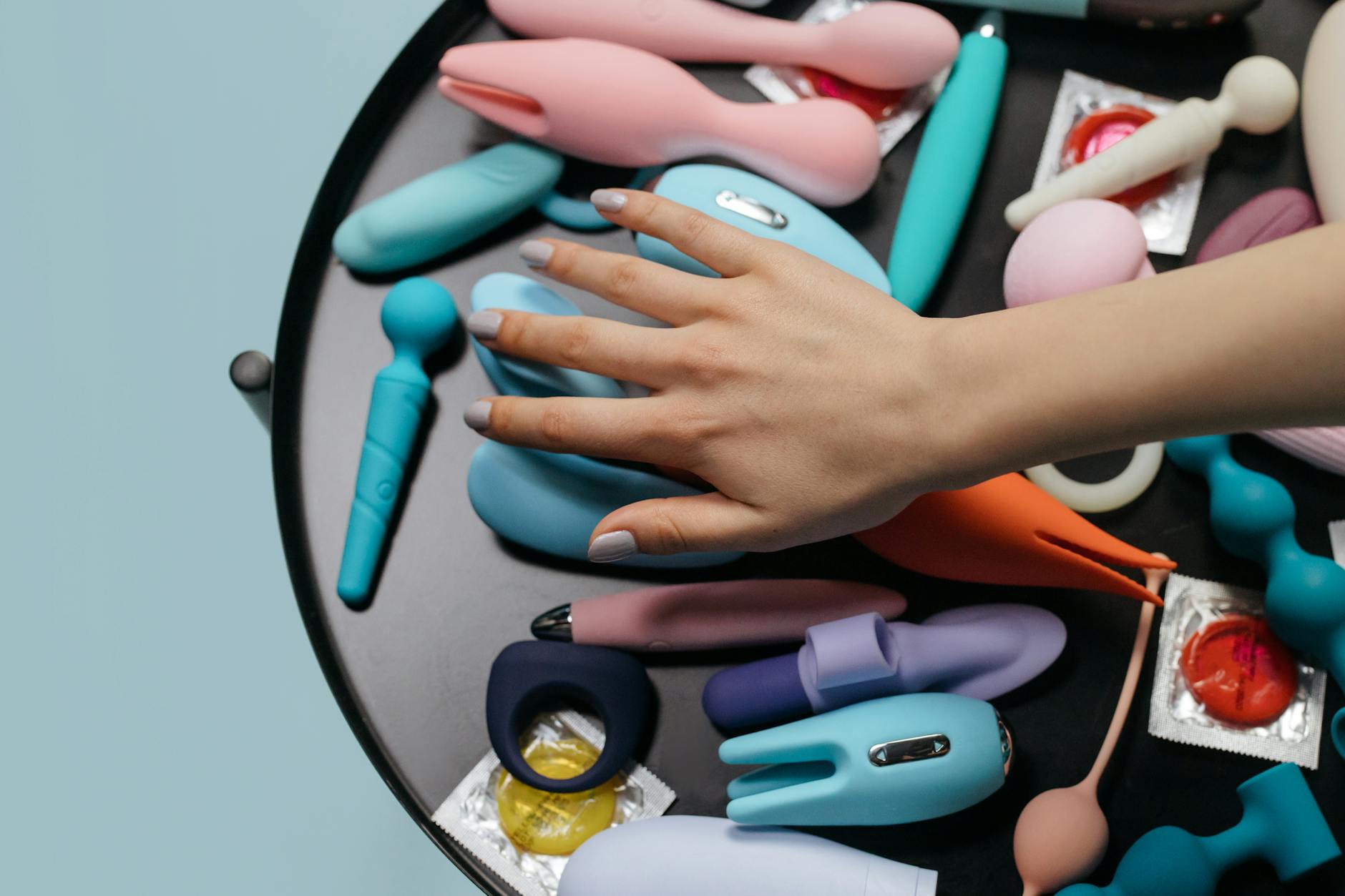
Photo by cottonbro studio on Pexels
When conflict is making you numb to sensation
Sometimes relationship stress doesn't kill desire. It makes you numb. You feel nothing, even when being touched. This is dissociation, and it's a protection mechanism.
If you're experiencing this, lemon clitoral vibrators can help, but you need a different approach. Start with lower frequencies, not higher ones. The Lem on pattern 1 or 2 gives focused sensation without overwhelming your nervous system further.
Combine the vibrator with breathwork. Breathe in slowly through your nose for four counts, hold for four, release for four. Do this for a few minutes before you start touching yourself. This signals to your nervous system that it's safe to come back online.
You might not feel much the first time. That's okay. You're teaching your nervous system that sensation is safe again, that you can feel without being in danger. This happens gradually.
If numbness persists beyond a few weeks, consider talking to a therapist who specializes in somatic work or trauma. Sometimes dissociation in relationships needs more than solo touch work.
After the conflict starts to soften
Once you and your partner have begun to reconnect (even slightly), lemon sexual toys become a bridge back to physical intimacy without the pressure of traditional sex.
You can use your Lem together, with your partner watching, or you can use it during partnered touch as foreplay. Many couples find that introducing a toy when they're still building trust actually reduces performance pressure because there's a third thing in the room taking some of the responsibility.
Some partners worry that a vibrator means they're not enough. In reality, during relationship repair, a vibrator is a tool that lets pleasure exist without the emotional weight that sex carries when you're rebuilding trust.
Your partner can be involved without having to perform. They can touch your hand while you use your lemon vibrator. They can talk to you. They can create space for you to feel good while the relationship is still tender. This is how physical intimacy sometimes rebuilds faster than through sex itself.
FAQ: Lemon Vibrators and Relationship Stress
Can using a vibrator alone while your relationship is struggling make things worse?
No. In fact, abandoning your own pleasure while your relationship is difficult usually makes things worse. When you stop touching yourself, stop feeling pleasure, stop claiming your own body, you often become resentful, depressed, or numb. Solo pleasure is not a substitute for working on the relationship, but it is a foundation. You can't reconnect with your partner from a place of self-abandonment.
Should I feel guilty using a lemon clitoral vibrator when my partner and I are fighting?
Feel it if you do, but don't let it stop you. Guilt often comes from the belief that your pleasure is secondary to the relationship's mood. It's not. Your nervous system needs regulation. Your body needs to remember it's safe. These are not selfish acts. They're self-preserving ones.
How long does it typically take before using a lemon vibrator during relationship stress helps you reconnect with your partner?
It depends on the severity of the conflict and how quickly you and your partner are working on things. Most people notice a shift in their own nervous system (less anxiety, more grounded) within a few solo sessions. Reconnection with your partner usually takes longer and depends on active repair work from both of you. The vibrator helps your body reset. It doesn't fix the relationship itself.
Can I use a lemon vibrator right after a big fight, or should I wait?
Use it whenever your nervous system needs it. The best time is when you're calm enough to focus, not in the immediate heat of the fight. Give yourself an hour or two to decompress after the argument, then give your body the reset it needs. This often helps you approach the repair conversation with more clarity.
Is using a clitoral vibrator a sign that our sex life is broken?
Not at all. It's actually a sign that you're being resourceful about pleasure during a difficult time. Most long-term relationships go through phases of disconnection. Using tools like lemon vibrators helps you stay connected to yourself while you work on reconnection with your partner. That's wisdom, not weakness.
Should I tell my partner that I'm using a lemon vibrator for relationship stress, or keep it private?
That depends on your relationship and communication style. If you eventually want to use it together, honesty tends to help. But you don't have to share everything immediately. If it feels safer to have a few solo sessions first and then mention it when you're ready, that's valid too. The key is that it's not a secret you're keeping to hide shame. It's privacy you're maintaining while you take care of yourself.
The bottom line: pleasure as resistance
When your relationship is stressed, claiming pleasure is an act of self-respect. It's saying to your body and your nervous system: "We're going through something hard, and you still matter. You still deserve to feel good."
Lemon clitoral vibrators are tools for that reclamation. They're not solutions to the relationship conflict itself. But they are how you stay grounded, regulated, and sane while you do the harder work of repair. Use them. Enjoy them. Let your body remember what it feels like to feel safe.
If you're struggling with relationship stress and need more support, reach out to a couples therapist or explore resources designed for navigating conflict and reconnection. Your pleasure matters. So does your relationship. Both can be true at once.