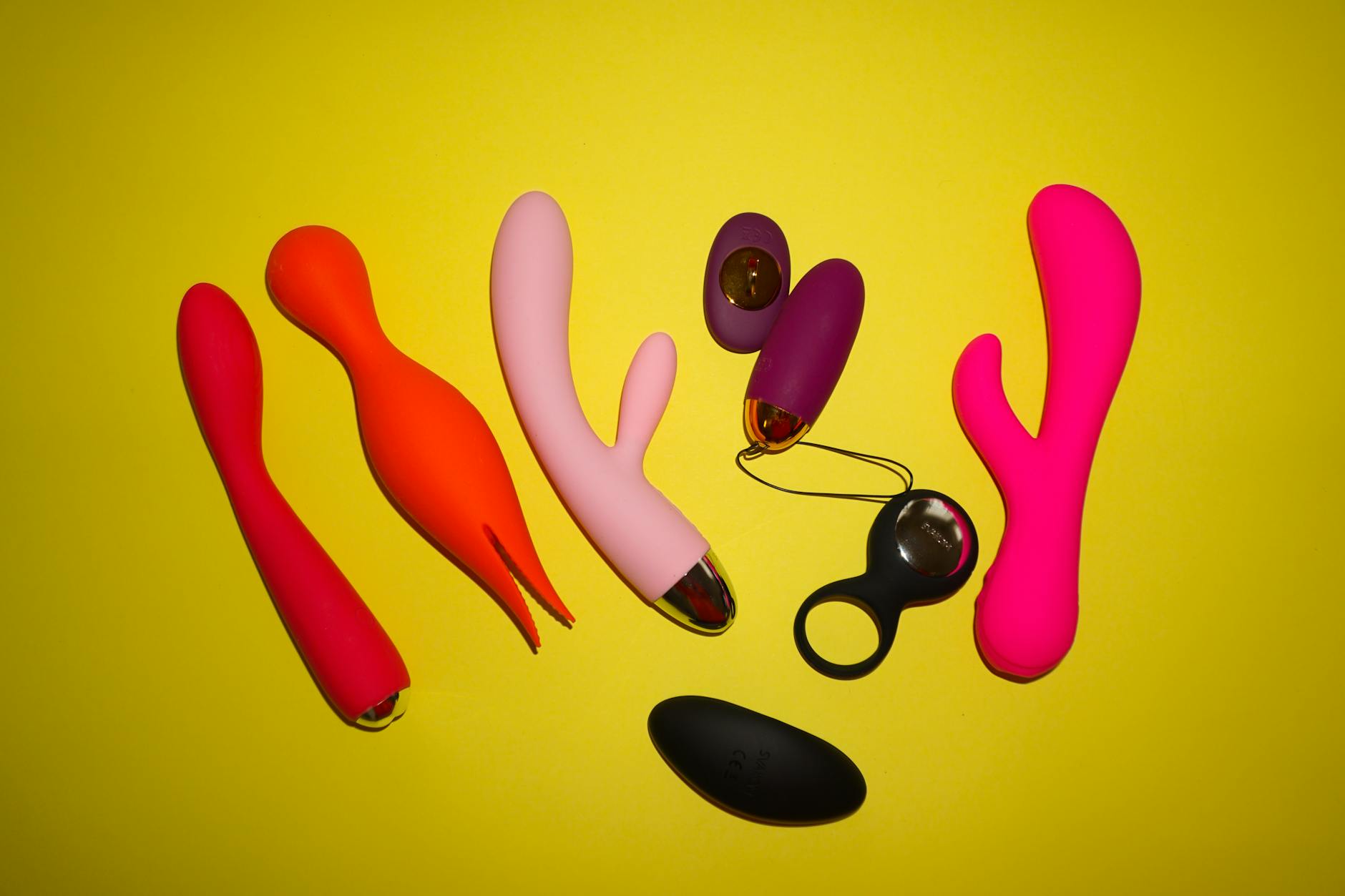
Let's name what's actually happening
Your partner doesn't engage with your pleasure. Maybe they dismiss toys outright. Maybe they ignore your requests for different kinds of touch. Maybe they've made you feel like wanting more is somehow selfish or insatiable. And now you're here, looking at lemon clitoral vibrators, wondering if this is the answer or if using one alone will just make the disconnection feel worse.
Here's what I know from years of couples work: you're not broken, and you're not asking for too much. What's happening is a disconnection. And yes, a lemon vibrator can help you reclaim your body while you figure out what comes next.
The pattern that gets people stuck
In relationship therapy, we see a specific loop. One partner's sexual needs get smaller and smaller. They ask less. They initiate less. They start to believe their desire is the problem. Their partner, noticing the withdrawal, interprets it as disinterest instead of hurt. The disconnection compounds. Eventually, one person picks up a vibrator not because they want one but because they've stopped believing their partner will ever care.
That's not a toy problem. That's a communication problem with a pleasure problem sitting on top of it.
But here's the thing: using a lemon vibrator doesn't have to be the end of that conversation. It can be the beginning.
Why lemon vibrators specifically help in this dynamic
Lemon sexual toys, especially air-suction models like the Lem vibrator, work differently than other clitoral vibrators. They use gentle pulse patterns rather than high-speed buzz. This means you can use them solo without the sensation feeling reactive or frantic. You get time to feel your own body, rebuild the neural connection between pleasure and safety, and remember what your arousal actually feels like when you're not performing it for someone else.
That matters when you've spent years calibrating your pleasure around someone else's boundaries or indifference. Your nervous system has learned to shrink. A lemon clitoral vibrator gives your body permission to expand again without requiring anyone else's approval first.
Step one: use it alone, intentionally
Not as a band-aid. Not as a replacement for intimacy with your partner. As a deliberate act of self-reclamation.
Set aside 20-30 minutes when you won't be interrupted. This isn't rushed. This isn't about getting off quickly. Start with your clothes on if that feels safer. Explore what rhythm actually feels good to your body without anyone else's expectations in the room. Many people discover that they've been having orgasms that were oriented entirely toward their partner's timeline or pleasure. Lemon vibrators often reveal something different: what you actually want when you're the only one who matters.
This solo practice does something crucial. It separates "your pleasure" from "couple's sex." Right now, they're probably fused. Your partner's dismissal of toys feels like rejection of your sexuality altogether. Solo use creates space between those two things.
Step two: get curious about the resistance
Once you've reconnected with your own body, the next move is direct conversation with your partner. Not accusatory. Genuinely curious.
"When I brought up wanting to use a vibrator, you seemed upset. I want to understand what that was about." Then sit with the answer. Common ones:
- "I feel like I'm not enough." (This is about their insecurity, not your need.)
- "It seems weird or clinical." (This is about their unfamiliarity or shame.)
- "I don't want toys in our bed." (This is a boundary worth discussing, not a rejection of your pleasure.)
- "I just don't like talking about sex." (This is avoidance, and it's the real problem.)
Each of these is fixable, but only if you name it first. Your partner refusing to acknowledge your needs often isn't refusal to hear you. It's refusal to engage in the conversation at all. The vibrator becomes the symbol of that refusal.
Step three: introduce the vibrator as information, not confrontation
If your partner is open to it: "I want to show you what feels good. Not so you do it exactly this way, but so you understand what my body responds to." This reframes the lemon vibrator from threat to tool for connection.
You might use it during couple's foreplay. You might use it alone while they're present. You might ask them to hold it. Whatever creates the least defensiveness and the most curiosity.
The goal isn't to prove your partner wrong. It's to make your pleasure visible and real instead of theoretical.
When introduction doesn't work: what that means
If your partner remains hostile to the idea of you using any vibrator, including lemon clitoral vibrators, you're not dealing with a toy problem. You're dealing with a partner who cannot or will not engage with your autonomy. That's the actual issue that needs addressing.
Here's what this might signal:
- Deep shame about sexuality in general (worth exploring, maybe with a therapist)
- Control issues (worth naming directly)
- Fundamental incompatibility around sexual needs (worth taking seriously)
- Avoidant attachment that extends beyond sex into all intimacy (worth professional support)
A lemon vibrator can't fix any of those. But it can help you get clear on what you need and whether your partner is willing to move toward that with you.
What solo use accomplishes while you're figuring it out
If your relationship is in that uncertain space right now, using lemon adult toys solo serves another function. It reminds your body that pleasure is yours. Not something you earn through your partner's approval. Not something you forfeit when they're dismissive. Yours.
This sounds abstract until you're actually in it. Then it becomes the most grounded, physical reality. Your hand on the Lem vibrator. Your breath. Your body's response. None of that requires your partner's permission.
That doesn't solve the relationship problem. But it stabilizes you while you figure out if the relationship problem is solvable.
The conversation script that sometimes breaks the stalemate
If you want to try once more with directness: "My pleasure matters to me, and I need it to matter to you too. Not because I need you to provide it exactly, but because I need you to care that I have it. Using a vibrator isn't about you not being enough. It's about me taking my sexuality seriously. I'm asking if you can do that with me."
Then listen. Not to defend yourself. To actually hear if your partner is willing to shift. Some people do, once they understand it's not a referendum on them. Some people don't. Both are information.
FAQ: What actually happens next
Will using a lemon vibrator make my partner angrier?
Possibly, in the short term. But that anger usually signifies the disconnection was already there. Using the vibrator doesn't create the problem. It reveals it. That's uncomfortable but necessary.
Can lemon clitoral vibrators replace intimacy with my partner?
No. They can complement it, but they solve a different problem. If your partner refuses to engage with your pleasure at all, a vibrator helps you remember your body matters. But it doesn't fix the relationship. Only communication and willingness to change can do that.
What if my partner wants to use the lemon vibrator on me but still won't talk about it?
That's progress, but it's not the whole picture. Physical connection without emotional acknowledgment often deepens the wound. You need both. If your partner will use a lemon vibrator with you but refuses to name what you're doing or why it matters, bring that up. "I appreciate this, and I also need us to talk about it." That conversation is the real intimacy.
How long before using lemon adult toys solo helps me feel better?
Often immediately, in terms of physical pleasure. In terms of the relationship shift, it depends entirely on whether your partner is willing to engage differently. Solo pleasure practice typically takes 3-4 weeks before you notice real changes in how you relate to your own body.
Should I tell my partner I'm using a vibrator?
That's your choice. Some people find that honesty opens the conversation. Others find it escalates defensiveness. You know your partner. But keep this in mind: hiding it also communicates something. It suggests your pleasure is something to be ashamed of. You get to decide if that's a message you want to keep sending.
What if we have different ideas about what lemon clitoral vibrators mean?
You probably do. Your partner might see a vibrator as a sign that couple's sex isn't working. You might see it as a tool for enhancement. That difference is exactly what needs discussing. Don't assume you're on the same page. Make the page explicit.
The bigger picture
Your partner refusing to acknowledge your needs isn't fundamentally about lemon vibrators. It's about whether they see your pleasure as valid. Whether they can hold your sexuality without it threatening theirs. Whether they're willing to grow.
A lemon vibrator can help you reconnect with your body while you find out. It can give you a foundation of self-respect that makes the conversation clearer. And it can show you, viscerally, that your pleasure doesn't require anyone else's permission to matter.
That's powerful information, whatever comes next.