
Here's what nobody tells you about your cycle and pleasure
Your clitoris doesn't feel the same every week. This isn't in your head. Hormones rewire how sensitive you are, how quickly you respond, and what intensity actually feels good. Most people cycle through four distinct sensation zones across their menstrual month, and almost nobody's been taught to notice this, let alone adapt to it.
I spent years watching clients try the same lemon vibrator settings week after week, then assume something was broken about their body. It wasn't. They were just trying to get the same result with a changing instrument. Once they learned to track and adjust, their pleasure became more consistent and, weirdly, more intense.
Let's break down what's actually happening in your body, and how to make your clitoral vibrator work for you instead of against you.
The four phases and what each one means for sensation
Phase one: menstruation (roughly days 1-5). Estrogen and progesterone are both low. Your clitoris tends to be less engorged, tissues are thinner, and sensitivity leans toward the tender end of the spectrum. This is not a bad time to use a lemon vibrator, but you'll want lower intensity and more lubrication. Your threshold for overstimulation drops here. Think of it as the "comfort setting" phase.
Phase two: follicular (roughly days 6-13). Estrogen starts climbing. Your clitoris begins to fill with blood, tissues plump up, and sensation becomes sharper and more responsive. By day 12 or 13, many people report that mid-intensity feels amazing where it might have felt overwhelming a week earlier. This is often when people feel ready to explore higher settings on their lem vibrator.
Phase three: ovulation (roughly day 14, give or take). This is the peak. Estrogen peaks just before ovulation, progesterone is still low, and clitoral sensitivity reaches its maximum. The glans of the clitoris is most engorged. Orgasms often come faster, feel more intense, and some people report multiple orgasms come more easily during this window. This is when higher intensity settings on lemon clitoral vibrators feel best for many people, and when they might naturally reach for the Lem's stronger patterns.
Phase four: luteal (roughly days 15-28). Progesterone rises and estrogen fluctuates. Sensitivity becomes more variable in this phase. Early luteal often mirrors late follicular, but as progesterone climbs, sensitivity often shifts again. Your clitoris may feel less responsive overall, and you might need more time to build arousal. Later in the luteal phase, as both hormones drop, you might cycle back toward the tender sensitivity of menstruation.
Not everyone experiences these phases identically. Stress, sleep, hydration, medication, and individual variation all matter. But the pattern is real enough that once you start noticing it, it becomes weirdly predictable.
Why lemon vibrators are particularly good for tracking this
Air-suction clitoral vibrators like the Lem work through gentler pressure rather than direct friction. This means you can use them across a wider range of sensitivities without discomfort. On the lighter suction patterns, they feel almost meditative. On the stronger patterns, they deliver intense stimulation without the sharp friction that can feel too much during lower-sensitivity weeks.
The point: you can stay with the same tool across your entire cycle. You're not reaching for something different when your body shifts. You're just adjusting the dial. That continuity matters psychologically, and it also means you learn the device better. You know exactly how each setting feels, so you can predict what your body will respond to as you move through the month.
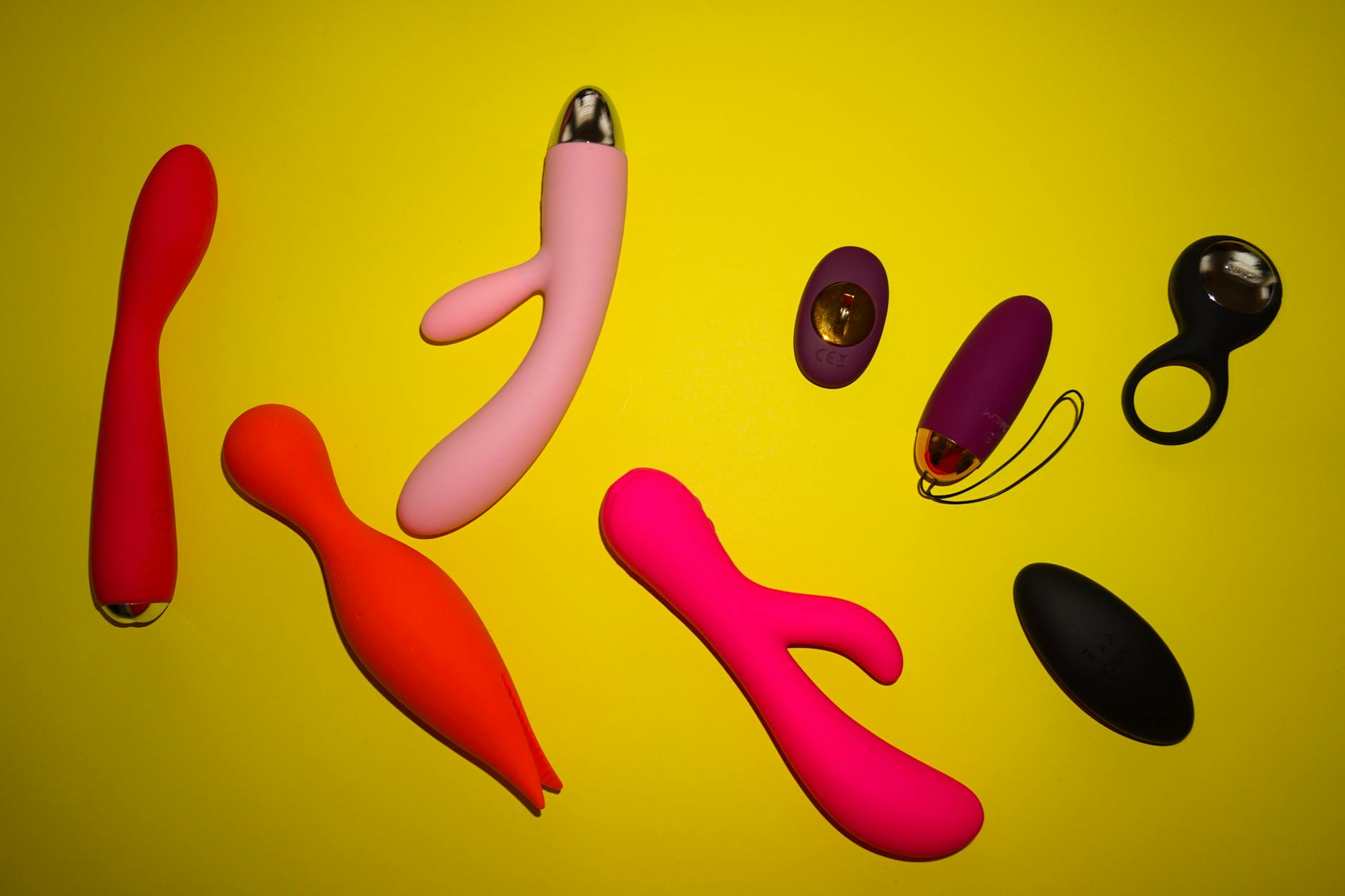
Photo by DRT.fm on Pexels
How to actually track and adjust
Start a simple notation system. You don't need an app. A note in your phone's calendar works fine. Day of cycle, then one line: "used Lem, pattern 2, felt good" or "pattern 4 felt sharp today." After three cycles, patterns emerge.
Create a personal intensity map. Jot down which Lem pattern settings feel best in each week. You might find that menstruation weeks feel best on patterns 1 or 2, follicular phase wants patterns 3 or 4, ovulation craves patterns 5 or 6, and luteal varies depending on the week. This isn't rigid. It's a starting point that your body can teach you to refine.
Adjust your warm-up time by phase. During menstruation and late luteal, you might need 15 to 20 minutes of gentle stimulation before reaching orgasm. During ovulation, it might take five. This isn't a sign that something's wrong. It's just the reality of hormonal shifts. Plan your time accordingly, and stop trying to force the same timeline across all four weeks.
Notice when lubrication needs shift. Estrogen affects cervical mucus and tissue hydration. During menstruation and late luteal, lubrication drops. You might need additional water-based lube even though you don't during the follicular or ovulation phases. This is normal and easy to manage. Treat it like adjusting the intensity: it's just a dial, not a problem.
What happens when you ignore these shifts
Most people accidentally do this: they find one intensity and pattern that feels amazing (often during ovulation or peak follicular), then expect that same setting to feel the same every single day. When it doesn't work as well during menstruation or late luteal, they assume their body's become numb to it, or that they've "built tolerance." Neither is true. Their body just shifted.
Some people respond by pushing the intensity higher to recreate that peak feeling. This can actually backfire. During tender weeks, higher intensity on a lemon clitoral vibrator can feel sharp rather than pleasurable, which can create negative associations with the device itself.
Other people give up, thinking their cycle makes pleasure inconsistent or unreliable. Again, not true. You just need to learn the rhythm.
Cycle syncing and fantasy: what's real
You've probably heard the term "cycle syncing." The internet is full of claims that you should time your workouts, your diet, your skincare, and your pleasure around your cycle. Some of this is marketing nonsense. Some of it is grounded in genuine physiology.
For lemon vibrators and pleasure specifically, what's real: your sensitivity does shift, and adapting to it makes sense. What's oversold: the idea that you need a complicated protocol or that syncing your pleasure will magically solve relationship or body image issues. Noticing your cycle is useful. Obsessing over optimising every single sensation is not.
Just track it simply, adjust your approach, and give yourself permission to explore what feels good in each phase rather than assuming one setting should work all month.
When cycle tracking gets complicated
If you're on hormonal birth control, your cycle is artificially managed. You might still notice subtle sensitivity shifts across your pack, or you might not. This is individual. Tracking still helps because it shows you what's actually happening in your body rather than what you think should be happening.
If your cycle is irregular or absent due to stress, medical conditions, or medication, you can still use lemon sexual toys effectively. You'll just track based on how you actually feel rather than predicted cycle days. Notice your patterns across weeks or months, then adjust.
If you're perimenopausal or postmenopausal, your baseline sensitivity might have shifted entirely. [Age-related changes affect response time in ways that matter for pleasure], and that's something to work with, not against. The same principle applies: track what actually happens, then adjust your lemon vibrator approach accordingly.
The real payoff
Once you start paying attention to these shifts, something interesting happens. Pleasure stops feeling like "sometimes it works, sometimes it doesn't." It becomes predictable in a way that's actually liberating. You know what your body needs each week. You know what intensity to reach for. You know how long to give yourself. That knowledge is power, and it's also deeply grounding.
You also stop pathologizing normal variation. Your clitoris isn't broken. It's just responsive. [How to use lemon vibrators when your clitoris needs gentler stimulation] and when it craves intensity are both normal and both manageable with the right information and the right tool.
Frequently asked questions
Can I use a lemon vibrator during my period?
Completely. Many people find it helpful. Your clitoris might be more tender, so start with lower intensity and more lubrication. Suction-based vibrators like the Lem are often more comfortable during menstruation than friction-based toys because the pressure is more diffuse. Menstruation doesn't make your vulva fragile or less capable of pleasure.
Will my clitoris become numb if I use a lemon vibrator every day?
Not from daily use if you're paying attention to intensity and not pushing through discomfort. Genuine desensitisation happens from sustained, intense pressure applied without adaptation. If you're noticing reduced sensitivity, it's more likely that your cycle has shifted or you're using an intensity that's too high for this particular week. Step back and reassess rather than assuming your body's broken.
Does ovulation really feel that different with a vibrator?
For most people, yes, though the magnitude varies. Ovulation typically brings peak clitoral engorgement, which means faster arousal, more intense sensation, and easier orgasms for many. Some people experience it dramatically. Others notice subtle shifts. Either is normal. Tracking your own pattern is more useful than comparing to someone else's experience.
Should I tell my partner about my cycle sensitivity changes?
If you're with a partner, absolutely. It removes a layer of confusion and opens the door to better planning. "I'm in my follicular phase, so intensity 5 on the Lem felt amazing today" is way more useful information than "sometimes it works, sometimes it doesn't." Partners who understand the cycle can anticipate what you might enjoy and feel less responsible when pleasure doesn't peak every single time.
What if my cycle sensitivity doesn't follow this pattern?
You might be an outlier, which is fine. That's why tracking matters. Follow your actual experience, not a template. Some people have flatter sensitivity curves across the month. Some have multiple peaks. Some have irregular patterns that don't correlate with cycle day. None of these are problems. They're just your individual pattern, and adapting to it is what matters.
Can I use lemon adult toys if I'm pregnant or trying to conceive?
During pregnancy, clitoral sensitivity often shifts substantially due to increased blood flow and hormonal changes. Many people find pleasure is actually enhanced. As long as your healthcare provider hasn't advised against sexual activity, lemon clitoral vibrators are safe. If you're trying to conceive, using a vibrator doesn't interfere with fertility. Some people find tracking sensitivity shifts helpful for understanding their cycle, which can be useful for conception planning, though apps and traditional methods are more reliable for that purpose.
The one thing to remember
Your pleasure isn't inconsistent. Your body is just talking in a language you've never been taught to hear. Once you start listening, the pattern becomes clear. Pay attention to what feels good each week, adjust your lemon vibrator settings accordingly, and trust that your body knows what it needs. That's not complicated. That's just paying attention.