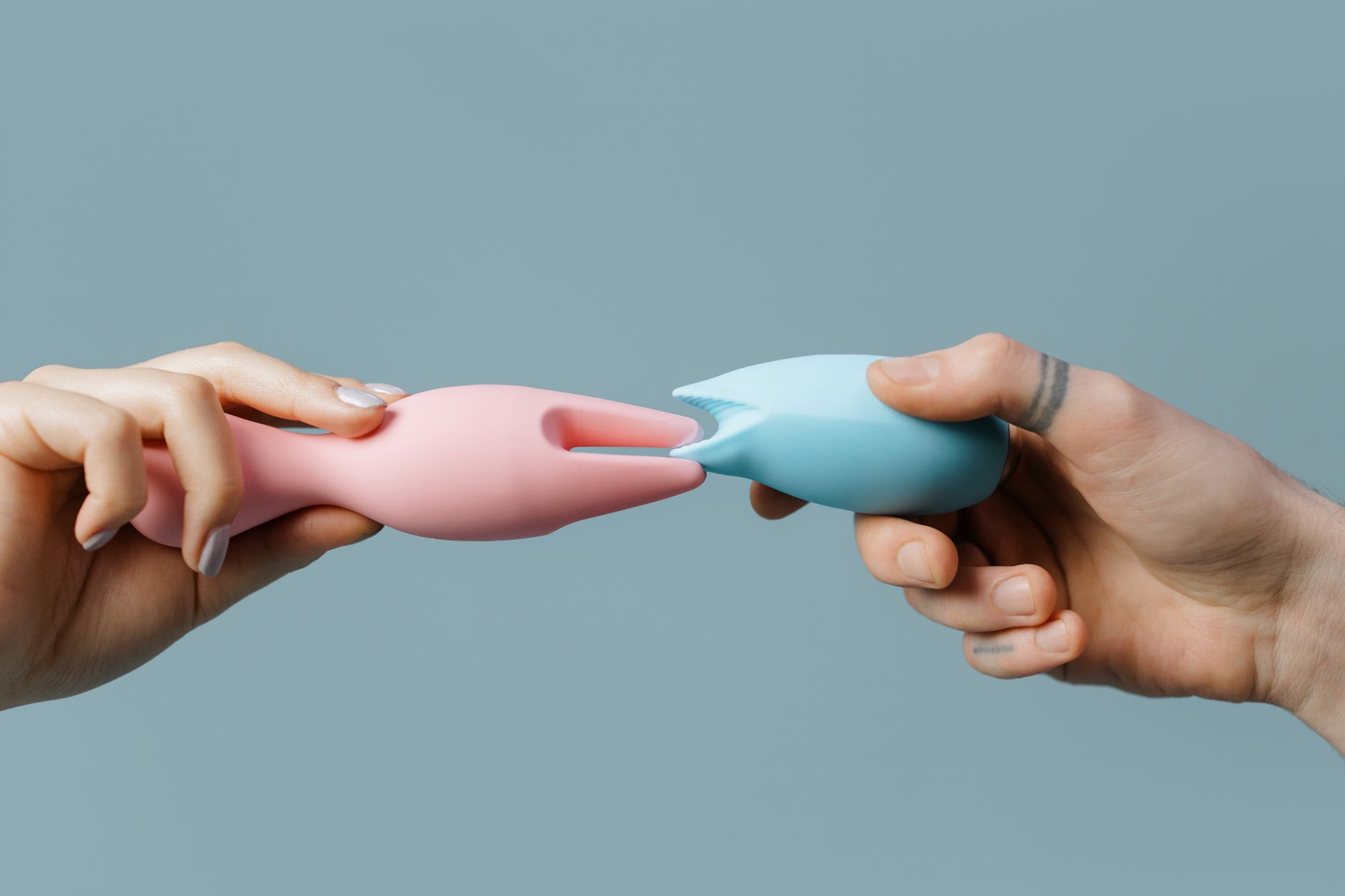
The split that nobody talks about
You can have an incredible orgasm alone. Solo time with a lemon vibrator feels good, responsive, uncomplicated. Then your partner walks in and something shifts. The body that knew exactly what it wanted five minutes ago suddenly feels distant, cautious, or just plain switched off. This isn't a malfunction. It's a really common disconnect between solo pleasure and partnered intimacy, and it deserves a proper conversation.
Here's what I see in my practice: many people report that their best orgasms happen alone, but their most meaningful connection happens with a partner. The frustration is trying to make those two truths exist in the same moment. They don't have to be mutually exclusive. But understanding why they feel that way is the first step.
Why solo and partnered pleasure feel like different countries
When you're alone with a lemon clitoral vibrator, you control everything. The pace. The pressure. The exact pattern that works. No performance pressure. No worrying about whether your partner is comfortable or enjoying it. No need to read anyone else's energy. Your nervous system is in control, not in conversation.
Partnered sex requires something completely different. You're managing two nervous systems at once. You're attuned to your partner's movements, breathing, cues. Your attention is split between what's happening in your body and what you're reading from theirs. For many people, that divided attention is exactly what kills arousal.
Add in the historical baggage that many of us carry around pleasure. Women especially are taught that "good" sex is partnered sex, that solo pleasure is something to move past or hide. So when a lemon vibrator feels amazing alone but that sensation doesn't transfer to intimacy, it can feel like a personal failure. It's not. It's neurology.
The bridge between two kinds of pleasure
Three things I recommend to couples navigating this gap.
First, rename what's happening. This isn't "my pleasure doesn't work with my partner." It's "my arousal has different conditions in different contexts." Context matters hugely. Your body isn't broken. It's just responding to two completely different scenarios.
Second, start small with integration. Don't jump straight to using a lemon vibrator during partnered sex if that feels like too much. Instead, create a middle step. Have your partner in the room while you use it alone. No pressure to perform. Just them being present while you access your own pleasure. This teaches your nervous system that their presence doesn't have to mean the pleasure disappears.
Third, communicate about what you need. This is the hardest one because it requires vulnerability. Most people assume their partner will feel rejected if they need a vibrator or if they need to warm up solo first. But partners usually want this information. They want to know what helps. Tell them specifically. "I need about ten minutes alone with my vibrator first," or "I feel more connected if we start with you watching." Specificity is sexy because it's honest.
How a lemon sucker can actually deepen partnered connection
Let's be practical about how lemon vibrators fit into shared intimacy. The clitoral vibrator works differently than other toys because it operates through suction and gentle pulsing, not deep penetration. This means it's less about filling space and more about concentrated sensation right where most people want it.
Use it solo first, in your partner's presence. Let them see what you look like when you're fully connected to your own pleasure. This matters more than you think. When your partner watches you orgasm with your own tools, they're not performing. They're witnessing. And witnessing is intimate.
Then, if it feels right, try using it together. Your partner might touch you elsewhere. Your hand might be on theirs. The vibrator stays in your control because that's where the sensation lives. You're not giving them control of your pleasure. You're inviting them to be alongside it.
Many couples find that this setup actually increases closeness because there's less pressure on penetration or traditional performance. The focus becomes sensation and presence instead. Your partner gets to be part of your experience without having to create all of it.
The emotional layer that makes the difference
Here's the thing about disconnected pleasure. It's usually not actually about the mechanics. It's about feeling safe enough to be fully present.
When you're alone, you're safe by default. There's no judgment. When someone else is in the room, your threat-detection system might activate even if your partner is kind and present. Your body might be saying, "I don't know if it's safe to want this much, feel this much, be this open."
This is especially true if you've been taught that your pleasure is somehow threatening or wrong. It takes time to rewire the nervous system into believing that your desire is welcome.
Start by using a lemon vibrator in solo sessions where you practice exactly what it feels like to ask for what you want without apology. Feel the difference in your body when you're unapologetic about pleasure. Then, when your partner is present, practice that same unapology. Not performance. Just honest presence in your own want.
Questions to ask before integrating toys into partnered sex
These matter more than any technique.
Do I actually want this, or am I trying to fix something I think is broken? If it's the second one, pause. Do the solo work first. Do I feel safe with my partner during vulnerable moments? If not, the toy won't fix that. The toy just makes the vulnerability more visible. Have I had the actual conversation about what this means to both of us? Assumptions are the enemy here. Specificity builds connection.
When disconnected pleasure signals something deeper
Sometimes the gap between solo sensation and partnered intimacy isn't about mechanics or nervous system arousal patterns. It's about the relationship itself. You might feel great alone because there's no unresolved tension, no resentment, no fear of rejection. With your partner, all of that surfaces.
If that's what's happening, a lemon vibrator won't bridge the gap. But a conversation with your partner might. Or a few sessions with a couples therapist. The vibrator can come back into play once the relationship foundation feels solid again.
Trust your instincts here. If pleasure feels disconnected and you can't pinpoint a physical reason, the answer might not be in the bedroom. It might be in the conversation you haven't had yet.
Frequently asked questions
Can I really use a lemon vibrator if my partner feels threatened by it? Not productively, no. If your partner is intimidated or jealous, introducing a toy will escalate that, not solve it. Start with the conversation about why the toy feels threatening to them. Often it's not really about the vibrator. It's about deeper fears around sufficiency or attraction. Address that first.
How long does it take for solo pleasure to feel connected to partnered sex? It varies. For some people, a few months of intentional communication and small integration steps does it. For others, it takes longer. The timeline matters less than consistency. Show up repeatedly with honesty.
What if I enjoy partnered sex but my orgasms are just better alone? That's actually completely normal and doesn't need fixing. Some people's bodies are wired for solo orgasm and partnered connection without requiring both at the same time. You can have fulfilling partnered intimacy without needing identical orgasmic response. The disconnect only becomes a problem if you're treating it as one.
Should I use a lemon clitoral vibrator during partnered sex every time or just sometimes? Just sometimes, at first. Variety keeps intimacy interesting anyway. Some nights are vibrator nights. Some nights aren't. Let that flexibility exist. Pressure to always perform the same way kills desire just as much as performance pressure itself.
What if my partner wants to use the vibrator on me but I want to control it myself? Tell them. Be specific about why. Maybe you need to control the intensity. Maybe having them do it feels like loss of autonomy. Maybe you want them to use their hands elsewhere while you handle this. All of these are valid. Your partner can learn to work with your boundaries.
How do I know if this is a relationship issue or actually a pleasure mechanism problem? Notice when the disconnect happens. If you feel great alone and with your partner, then suddenly feel disconnected when things get intimate, it's likely relational or emotional. If you feel physically different (less sensation, harder to reach arousal) regardless of your emotional connection, it might be physiological. Pay attention to what changes, not just that something does.
The real work is just honesty
Using a lemon vibrator in the context of disconnected pleasure isn't actually about the toy. It's about creating space for honesty. When you can say, "I need this tool to feel something," you're also saying, "I trust you enough to let you see what I need." That vulnerability is where real intimacy lives.
Start small. Solo sessions. Your partner present but not participating. Then, only when it feels natural, integration. And through all of it, keep talking. The vibrator is just the vehicle. Connection is the destination.
If you're struggling to bridge this gap on your own, that's what I'm here for. Reach out and let's work through it together.