When orgasms go quiet, it's usually not random
Let's be real. Orgasms that used to arrive reliably now feel like they're hiding. You warm up. You focus. You try all the things that worked before. Nothing. That spiral of trying harder while feeling nothing closer is its own special kind of frustration, and I want you to know it's not you being broken. It's a signal. Your nervous system is telling you something has shifted.
That shift might be stress, medication, a relationship change, hormonal fluctuation, or simply that your body has figured out your old patterns don't work anymore. Whatever the reason, the solution isn't trying harder. It's recalibrating how you approach stimulation entirely. And that's where clitoral vibrators like the Lem become genuinely useful, not as a shortcut but as a reset tool.
Why distant orgasms happen in the first place
Orgasm is a chain reaction in your brain and body. It requires: blood flow to the clitoris, consistent nerve stimulation, mental focus, and your nervous system feeling safe enough to let go. Lose any one of those, and the whole thing stalls.
Here's what commonly disrupts it:
Stress and cortisol. Chronic stress keeps your sympathetic nervous system in overdrive. Your body is in protect mode, not pleasure mode. Orgasm requires parasympathetic activation. You're running two opposite programs simultaneously.
Medication side effects. Antidepressants, blood pressure meds, and hormonal birth control can dampen sexual response. It's not psychological. It's neurochemistry. Your nerves are less responsive to stimulation, period.
Performance pressure. The harder you try to come, the further you push orgasm away. This is physiological, not philosophical. Anxiety tightens the pelvic floor, restricts blood flow, and hijacks your prefrontal cortex. Your body interprets effort as threat.
Habituation. If you've been using the same stimulation for years, your nervous system has adapted. You've trained it to need that exact pattern. Anything different feels wrong, even though it might actually work better.
Relational friction. Unspoken resentment, disconnection, or mismatched desire kills orgasm faster than anything else. Your body knows the difference between genuine intimacy and going through motions.
The good news: every single one of these has a workaround.
Why lemon clitoral vibrators work when sensation feels stuck
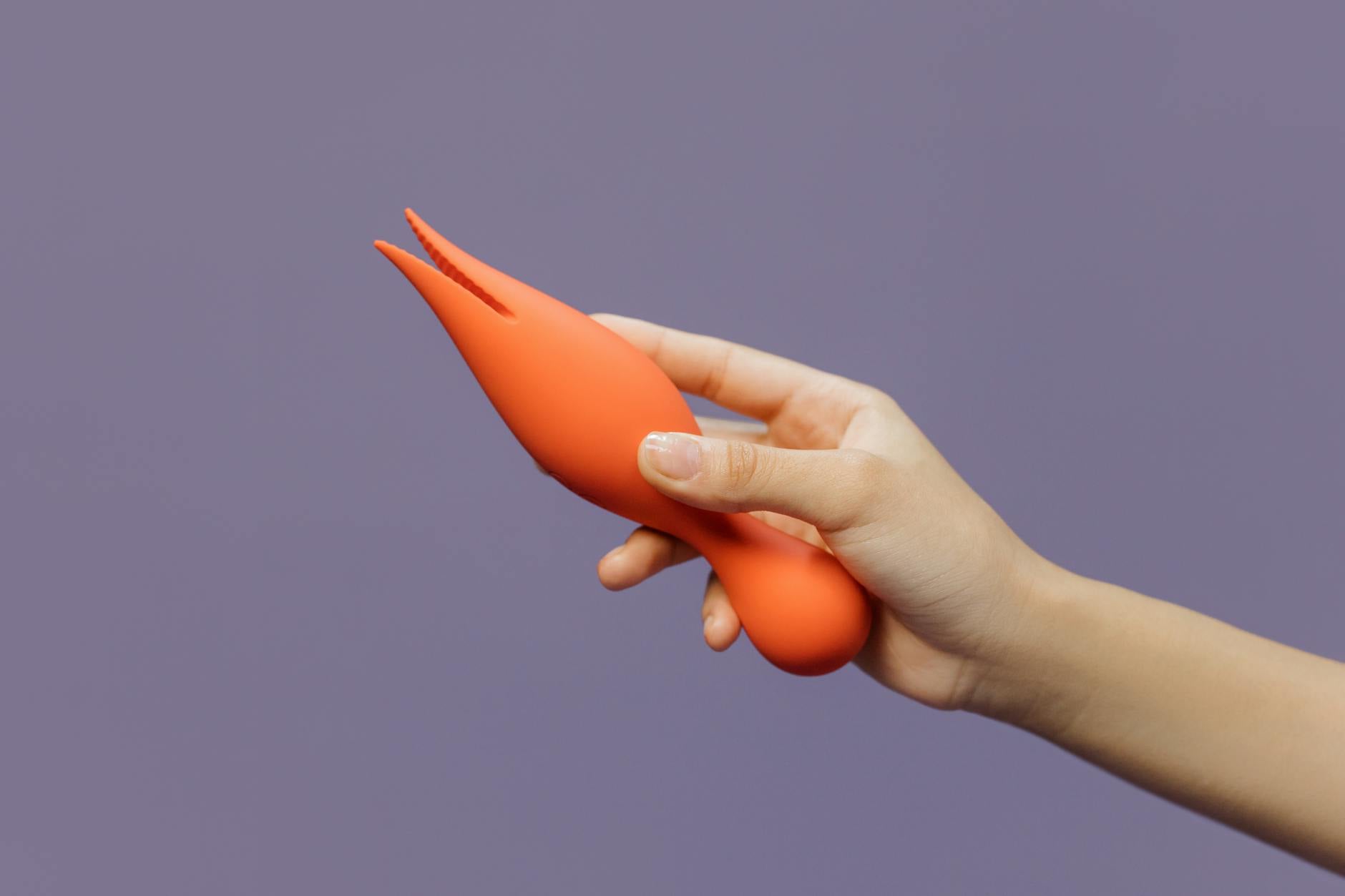
A lemon vibrator like the Lem uses suction and pulsation instead of direct vibration. That matters more than you'd think.
Direct vibration works by stimulating nerve endings through friction and repetition. Your nervous system learns the pattern, adapts to it, and over time needs more intensity or variation to respond. It's like scrolling through your phone. The first scroll is novel. By the hundredth, you're not really registering it.
Suction works differently. It creates a seal and applies rhythmic pressure that draws blood into the tissue and activates a different set of nerve pathways. For people whose clitoris has gone quiet, suction essentially reboots the system. You're engaging nerves that haven't been fired up by your usual routine. That novelty is the point. Your body hasn't adapted to it yet.
Second, suction is gentler on sensitive or numb tissue. If you've been white-knuckling through orgasm attempts with high-intensity vibration, your clitoris might actually be fatigued or irritated. You can't feel pleasure through inflammation. The Lem's pattern starts low and builds, which lets you find sensation without overwhelming exhausted tissue.

Photo by cottonbro studio on Pexels
The exact protocol that rebuilds access
This is the framework I recommend to clients who feel stuck:
Week one: sensation mapping without goal. Use the Lem on patterns 1 and 2 (the lowest settings) for 10-15 minutes. You're not trying to come. You're not timing it. You're noticing: does this feel good? Where exactly? Does sensation change across the session?
Keep a one-sentence note after each session. "Felt warm and tingly." "Nothing for five minutes, then a flutter." "Weird sensation above the clitoris." You're building data, not chasing results.
Week two: add warmth and time. Extend sessions to 20 minutes if sensation is appearing. Use a heating pad on low beneath you or run a warm bath beforehand. Heat increases blood flow and lowers your nervous system activation. Use the Lem on patterns 2-3. If you're feeling anticipatory or pressured, stop. Pressure kills this entire process.
Week three: introduce pattern exploration. Most lemon vibrators have 5-10 patterns. Spend one session exploring each one for two minutes. Notice which patterns feel closest to pleasurable. You're not chasing orgasm. You're training your nervous system to recognize what feels good. That recognition is the foundation.
Week four: build toward intensity gradually. Once patterns 2-3 feel reliably pleasant, add pattern 4. Let your body spend 15-20 minutes at the new level. Orgasm may or may not happen yet. That's fine. You're rewiring response, not chasing a finish line.
The mental game that actually matters
Technique is maybe 40% of this. The other 60% is what's happening in your brain.
When you've been chasing orgasm and it hasn't come, your mind learns the script: "I'm going to try, it won't work, I'll feel disappointed." That script is more powerful than any vibration pattern. Your nervous system recognizes the story and shuts down before you even start.
Break the script:
- Use the Lem alone first. No partner, no performance expectation, no timeline. Alone time with a lemon clitoral vibrator lets you separate your pleasure from anyone else's experience or observation.
- Expect nothing. This sounds trite but it's mechanically important. The moment you're waiting for orgasm to happen, your prefrontal cortex is monitoring instead of receiving. You need to genuinely not care if it happens. If that feels impossible, shorten your session and come back when you're less invested.
- Stop before frustration. If you hit 25 minutes and sensation is flat, close it down. Frustration becomes your nervous system's new data: "This is stressful." You're trying to teach your body that pleasure is safe. Grim determination isn't safe.
- Name what you actually feel. Instead of "nothing," try "gentle pressure," "warm," "tingly," "confused," or "resistant." Specificity trains your attention. Your body isn't broken. Your attention has learned to dismiss subtle sensation because it's not the orgasm you're waiting for.
When to involve a partner (and how)
If you're in a relationship, the conversation matters as much as the technique.
Most partners assume distant orgasms are about them. They weren't attentive enough. They didn't try hard enough. They're not attractive anymore. Almost always, they're wrong. Orgasm distance is usually internal. But their assumption becomes pressure, which becomes your body shutting down further.
Separate conversations help: one about what's happening in your body ("Sensation is taking longer to build"), another about what your partner can do ("I need you to stop watching for signs I'm close and just enjoy touching me"). As you rebuild access with the Lem solo, you're gathering data about your own nervous system. Bring that data to a partner conversation.
When you're ready to integrate a lemon vibrator into partnered pleasure, how to use lemon vibrators for comfort when integrating toys into an established relationship walks through that transition step by step.
The timeline is not a race
Some people feel response shift within three sessions. Others take six weeks. Your nervous system does not care about your timeline. Pushing it faster guarantees failure.
I had a client who felt orgasms return after four weeks. Another took three months. The difference wasn't their body's capacity. It was that the first client had genuine patience and the second kept waiting for proof it was working. Patience works. Suspicion doesn't.
One more thing: if you're on medication that's affecting response, or if distant orgasms appeared suddenly alongside depression or anxiety, talk to your GP. Sensation changes after hormonal shifts explores how hormones complicate this. Sometimes the Lem is part of the solution. Sometimes you need medical support first. Both are real.
Frequently asked questions
Can I use a lemon vibrator if I've never had an orgasm?
Yes, though the protocol shifts slightly. You're not rebuilding access. You're building it for the first time. Start on patterns 1-2 and focus on sensation mapping rather than outcome. Many people find their first orgasm with suction because it activates different nerve pathways than their usual touch. Patience and curiosity matter more than anything.
What if the Lem feels too intense even on the lowest setting?
Start with the seal off or loosened. Use it on the surrounding area instead of directly on the clitoris. You're gradually training your tissue to tolerate sensation. Some people begin at the inner labia or pubic mound and migrate inward over weeks. That's fine. You're not doing it wrong.
How long should each session be?
15-25 minutes is the sweet spot for most people. Anything under 10 minutes doesn't give your nervous system time to settle. Anything over 30 starts feeling like work. If you're not feeling pleasure by 20 minutes, stop. Try again tomorrow. Quality beats duration.
Is it normal if orgasm still doesn't happen after four weeks?
It depends on what's driving the distance. If medication or hormonal factors are involved, you might need medical support alongside the vibrator work. If stress is the culprit, no vibrator replaces stress management. If relational friction is present, pleasure work with a toy won't fix disconnection with your partner. The Lem is a tool for rebuilding neurological response. It's not a fix for systemic issues.
Can my partner use the Lem on me if I'm having trouble reaching orgasm?
Yes, but I recommend starting solo first. That way you know what sensation feels good and you're not managing their technique anxiety on top of your own. Once you've rebuilt your own response, a partner can join the practice. Some people find partner-applied suction is easier than self-applied because they can fully receive instead of manage the device.
What if I'm worried the Lem won't work and I'm wasting money?
You're not. Lemon clitoral vibrators work by engaging your nervous system differently than your usual stimulation. That's almost always effective for rebuilding response. The bigger question is whether you can actually slow down enough to let it work. If you're someone who white-knuckles through everything, that's the real barrier. The tool is sound. The patience piece is on you.
The takeaway: your body still knows how
During orgasm distance, it's easy to believe your body has forgotten. It hasn't. Your nervous system has just learned new patterns and needs a different stimulus to wake up. A lemon vibrator like the Lem isn't cheating. It's providing the novelty your system needs to respond again.
Orgasm should feel accessible, not distant. That accessibility is yours to rebuild, and it starts with understanding what shifted in the first place. Once you do, the techniques follow naturally. Give yourself the time and permission to get there.