
Here's the real conflict
One of you is ready to try something new. The other is thinking "maybe, but I'm worried it'll be too much." That's not a small disagreement. It sits right at the intersection of desire, safety, and trust. And honestly, it's one of the most common conversations I see couples get stuck on.
The good news: lemon clitoral vibrators were designed almost specifically for this moment. They're intense enough to satisfy genuine curiosity, gentle enough to feel safe for someone nervous about overstimulation. No compromise, no settling. Both of you can actually get what you need.
Why you're nervous (and you're not wrong)
Most vibrators buzz. They buzz hard. If you've ever touched one accidentally or heard someone describe theirs, you probably got the impression that sex toys = aggressive, relentless, difficult to control. That's the reality of traditional vibrators. They have an on/off switch, maybe a few speed settings, and that's it. There's a reason so many people describe them as "too intense" or "numb out too fast."
Your hesitation makes complete sense. If something feels overwhelming during partnered sex, it breaks the mood. It makes you self-conscious. It puts your body into a defensive state instead of an open one. And then your partner feels rejected, even though what actually happened is sensory overload.
This dynamic often spirals: they feel hurt, you feel guilty, neither of you tries toys again for years.
What makes lemon vibrators different
Lemon clitoral vibrators use air-suction stimulation instead of traditional vibration. Instead of a motor buzzing against tissue, they create gentle waves of suction around the clitoris. It's fundamentally different from what you're imagining when you picture a vibrator.
Here's what that actually means:
- No numbing effect. Because suction stimulates differently than friction, your sensitivity doesn't flatten. You stay responsive, not numb.
- Gradual intensity. Most lemon vibrators have 7-10 suction patterns and intensity levels. You start at pattern 1 (barely-there) and work up only as far as feels good. Your partner doesn't control the pace. You do.
- Precise stimulation. The suction pulls blood into the clitoris, which intensifies natural arousal. It feels like amplification of your own body's response, not like something foreign is being imposed on you.
- Lower barrier to saying yes. When you know you can start gentle and stop anytime, the anxiety drops. That alone changes how your body responds.
Most of my clients who were nervous about intensity find that lemon vibrators feel safer than they expected. Not because they're weak, but because the sensation is controllable.
The practical conversation you need to have first
Before you even touch a toy, you and your partner need to agree on a few ground rules. This isn't unromantic. It's actually the most romantic thing you can do.
1. Acknowledge the different starting points. They're curious. You're cautious. Neither of you is wrong. Say that out loud. "I love that you want to explore this. I'm a little nervous, and that's okay." Full stop. Sit with it.
2. Agree that you control the intensity. Not negotiable. You start, you control the pattern, you control the speed. Your partner's job is to pay attention and be present. That's it. If they feel disappointed about that, go back to step one and talk it out.
3. Set a check-in moment. Agree that at some point (maybe 5 minutes in), you'll pause and tell them how it feels. "Gentler, please," or "That's perfect," or "Let's try a different pattern." These aren't mood-killers. They're trust-builders.
4. Make a cleanup plan. Lemon vibrators are waterproof and silicone-based, so you'll need water-based lube and a gentle soap. Knowing the cleanup routine ahead of time removes one more source of awkwardness.
How to actually start
Okay, you've talked. You've agreed on the basics. Here's what happens:
Your partner doesn't touch it first. You do. Alone, in your own time, before you use it together. This is non-negotiable. You need to understand how it feels on your body without an audience, without pressure, without anyone watching to see if you're enjoying it.
Start with pattern 1 or 2 on your own. Just get the basic sensation. Most people are surprised at how gentle the lower settings feel. Then maybe try a slightly higher pattern. You're not trying to have an orgasm. You're just learning the range.
Once you know how it feels, using it together becomes a lot less scary. You already know what to expect.
When you're actually together
Set aside actual time for this, not a hastily-planned thing while you're both half-focused on something else. You need mental space.
Start clothed or partially clothed. Let them watch you explore it on your inner thigh, or your collarbone, or your neck. This does two things: it desensitizes you both to the idea that toys are "weird," and it lets your partner see firsthand that you're in control and you're fine.
When you move to actual clitoral stimulation, have lube on hand. Water-based only. Apply it first, then bring the toy in at a low pattern. If it feels like "too much," say so immediately. Your partner stops, you switch to a lower pattern. There's no shame in this. Literally everyone does it the first time.
Many couples find that the first successful experience isn't about orgasm at all. It's just about "okay, this didn't hurt, I wasn't overwhelmed, and I can see why you were curious." That's a win. That's actually a huge win.
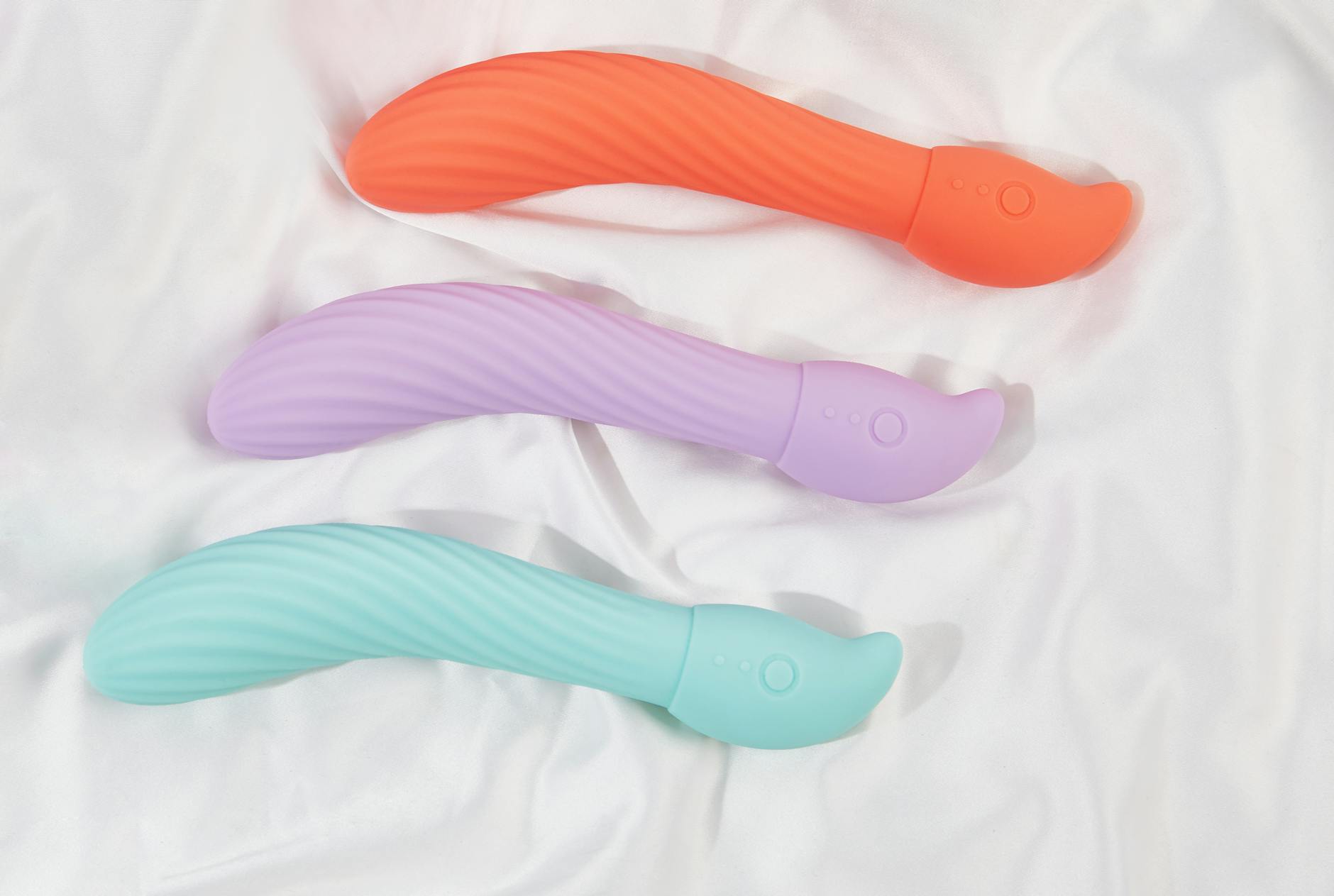
Photo by IFONNX Toys on Pexels
What happens after the first time
Your nervous system is going to need a little time to process. You might feel vulnerable. That's normal. Some people feel giddy. Some people feel surprisingly neutral. There's no "right" emotional response.
The key is that your partner doesn't make assumptions about what happened. If you felt neutral, that doesn't mean it didn't work or wasn't worth trying. It means you got data. You learned something about your body and what does or doesn't resonate with you.
If you loved it, great. You can explore more patterns, more times, more contexts.
If you hated it, that's also fine. You tried, you learned you're not a toy person (or not a suction toy person), and you can move on knowing that about yourself. The worst outcome isn't "we tried toys and I didn't like them." The worst outcome is "we never tried and we both wondered forever."
Why this actually strengthens your relationship
Here's what I've seen happen consistently when couples do this well: even if the toy itself doesn't become a regular part of their sex life, the experience of having the conversation, setting the boundaries, and respecting each other's nervous system? That changes things.
Your partner learns that "I'm worried" is not a rejection. It's information. You learn that their curiosity isn't pressure. It's invitation. You both learn that you can move through discomfort together without anyone losing their mind.
That skill transfers. It shows up in other conversations. Other vulnerabilities. Other times one of you wants something the other one isn't immediately sure about.
Sex is rarely the actual issue in relationships. It's usually about whether you can talk, whether you can be honest, whether you can trust each other to move at a pace that works for both of you. Lemon vibrators are just the vehicle. The real intimacy is in the conversation.
FAQ: Questions couples actually ask
Will a lemon vibrator feel overwhelming if I have a sensitive clitoris?
Most people with sensitive clitorises actually prefer lemon suction toys to traditional vibrators. Because the sensation is suction instead of direct friction, it feels less harsh. Start at the lowest pattern. You can always go up. You can never go down once you're already overstimulated.
What if my partner gets bored with the toy and I don't?
That's fine. Toys don't have to be a couples activity. If your partner tries it once and decides it's not for them, but you love it, you can use it solo. You don't have to use every experience together. Just because you buy it as a couple doesn't mean it has to stay that way.
How do I know what intensity to start with?
Start with pattern 1. Genuinely. It's so gentle that most people are surprised. If pattern 1 feels like nothing, pattern 2 usually feels right. You're never going to accidentally go "too hard" because you're controlling the progression.
Will my partner feel replaced or less needed if I use a toy with them?
Not if you talk about it first. The conversation is literally: "This isn't about you being bad at sex. It's about exploring a different sensation together." Most partners actually feel more connected because you trusted them enough to be vulnerable about your hesitation.
What if I feel weird about the toy looking like a lemon (or whatever the design is)?
First, that's fair. The design is intentional—it makes the object feel less clinical, more playful. But if it genuinely doesn't work for you visually, there are other lemon clitoral vibrator designs. The aesthetics matter because they affect how you feel about using it. Don't force yourself to use something that makes you feel weird about your own sexuality.
How long does it usually take to enjoy it?
Some people love it immediately. Others need three or four times to feel comfortable. Neither is the "right" timeline. Your nervous system is learning something new, and that takes whatever time it takes. Don't rush it.
The real permission you need
Here's what I want to say directly: you don't have to want toys. You don't have to love suction. You don't have to become the person who's always suggesting new experiences. You just have to be willing to try something your partner was curious about, within a boundary structure that keeps you safe.
That's not compromise. That's love. And the fact that you're even considering it, even though you're nervous, means you're already halfway there.
If you want to move forward with this, visit the Hello Nancy guides to learn more about how lemon clitoral vibrators actually work, or reach out if you have specific questions. Your hesitation is valid. Your partnership is worth exploring gently. That's all this is.